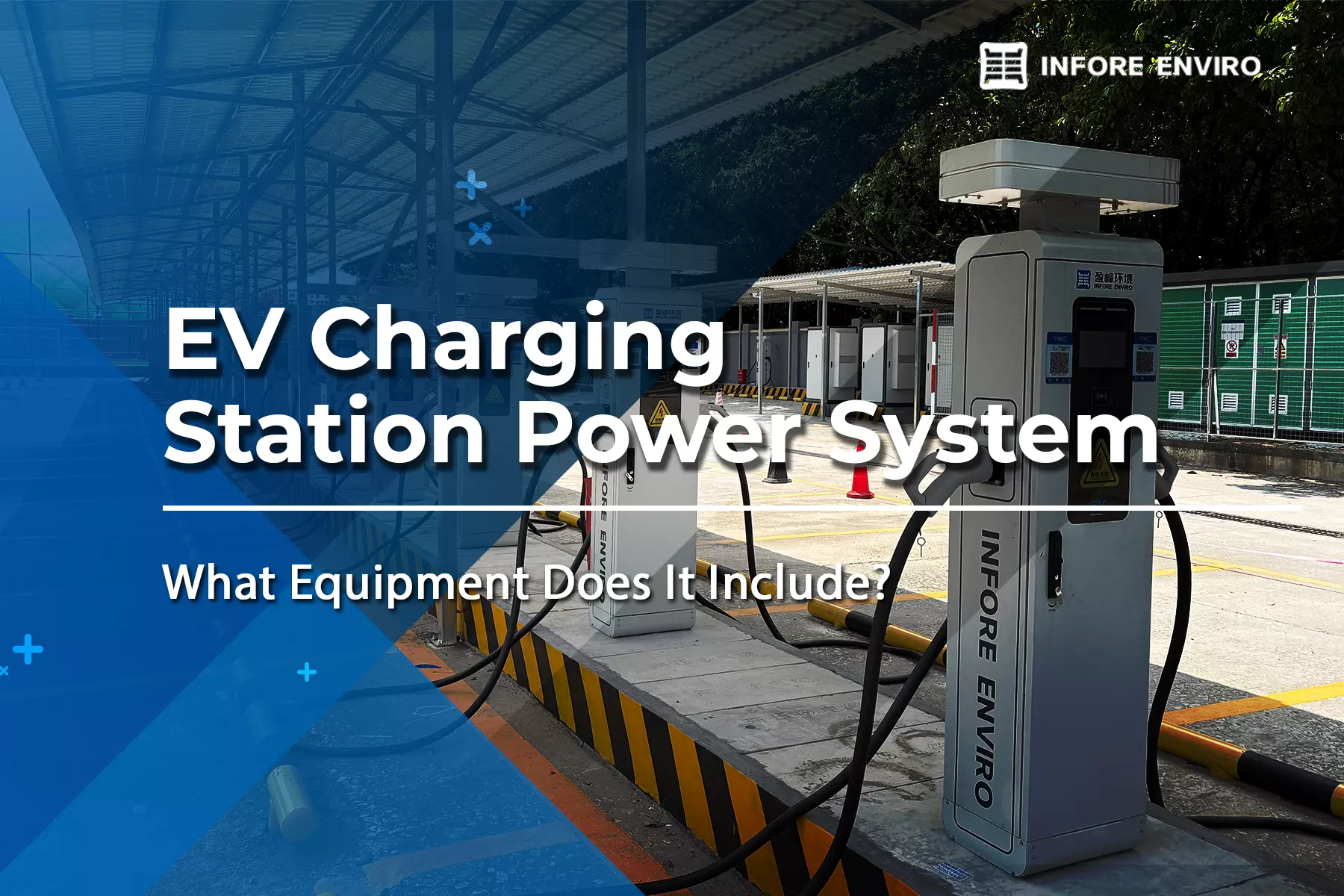
A DC fast charger can add a substantial amount of energy in a short period, but its advertised power does not tell the whole story. A 150 kW charger and a 350 kW charger may deliver very different results, while two EVs connected to the same charger can also charge at different speeds.
The useful question is therefore not simply how many kilowatts the charger provides. We need to know how much energy the vehicle can accept, how long it can sustain that rate, and how much energy the battery actually needs.
Charging Power Is Not the Same as Charging Speed
Charging power is measured in kilowatts (kW), while the energy added to a battery is measured in kilowatt-hours (kWh). Power describes the rate of energy transfer; energy describes how much electricity the vehicle receives.
In a simplified example, a charger delivering 100 kW for 30 minutes could theoretically provide about 50 kWh of energy. Real charging sessions will differ because charging power changes during the session and some energy is lost.
INFORE ENVIRO‘s current DC charging portfolio spans a full spectrum of power levels, ranging from compact lower-power models to high-capacity fast chargers, and further extending to the flagship Astra series for ultra-high-power applications.
What Can a Driver Realistically Gain in 10 or 20 Minutes?
A simple calculation gives a useful starting point. At a constant 150 kW, ten minutes represents roughly 25 kWh of delivered energy. Twenty minutes represents about 50 kWh. At a constant 350 kW, the theoretical figures rise to approximately 58 kWh and 117 kWh.
Those numbers are useful for understanding the scale, not for predicting an exact session. Actual charging rarely remains at the maximum rated output for the entire connection.
For example, a vehicle arriving with a low battery may initially accept high power, while the charging rate can fall as the battery approaches a higher state of charge. Battery temperature, vehicle limits, and charger operating conditions can also affect the result.
Why the Vehicle Controls the Final Result
A charger rated for a particular output does not force that power into every EV. The vehicle and charging system communicate to determine how much current and voltage can be accepted.
That makes the Level 3 DC fast charger a shared part of the charging equation rather than the sole determinant of speed. If an EV can accept only 150 kW, connecting it to a 350 kW charger will not automatically make it charge at 350 kW.
Battery condition matters too. A cold battery may initially charge more slowly, while a warm battery within its acceptable operating range may accept more power. The vehicle’s battery-management system continuously adjusts the charging process.
Where a 350 kW Charger Makes a Difference
A 350 kW DC fast charger becomes most valuable when the vehicle can actually use its higher output and when reducing charging time has operational value.
High-power charging can be particularly relevant at highway charging locations, commercial sites, and fleet facilities where vehicles cannot remain parked for long. A short stop that adds a meaningful amount of usable energy can support faster vehicle turnover.
INFОRE ENVIRO’s product category currently lists its Astra DC fast charger range at 240 kW–480 kW, illustrating that high-power charging infrastructure can extend well beyond typical fast-charging offerings in the market.
For a fleet operator, the question becomes practical: how much downtime can charging remove from the daily schedule? If a vehicle has only a limited break before its next route, higher-power infrastructure may have greater value than it would at a depot where vehicles remain parked overnight.
A Faster Charger Does Not Always Mean a Faster Session
Installing the highest-rated charger available can be unnecessary if the vehicles cannot use its capacity. Site electrical limitations can also make a large fleet of high-power chargers difficult to operate simultaneously without careful power management.
Charging demand should therefore be considered across the entire site. Several vehicles arriving together can create a much larger electrical load than one vehicle charging alone. Intelligent power allocation can help distribute available capacity according to vehicle needs and site constraints.
This is particularly relevant for commercial operators. A depot may have a mixture of vehicles, departure times, and battery capacities. Giving every vehicle maximum charging power may be less useful than directing higher available power toward vehicles with the shortest turnaround time.
How to Estimate Charging Time Before Installation
A practical estimate starts with the energy requirement rather than the charger label. First determine how many kWh the vehicle needs to add. Then consider the charging power the vehicle can accept and allow for the fact that the rate will not necessarily remain constant.
A simplified formula is:
Charging time ≈ Energy required ÷ Average charging power
Suppose an EV needs 60 kWh and averages 120 kW during the relevant part of its session. The simplified estimate is about 30 minutes. A real session may take longer because charging power varies throughout the battery’s state-of-charge range.
That distinction is essential when evaluating a 350 kw DC fast charger. The 350 kW figure represents available charging capacity, not a promise that every EV will receive 350 kW continuously.
We therefore recommend evaluating DC fast charging by usable energy delivered within the required parking window. For a public site, that may mean minimizing customer dwell time. For a fleet, it may mean ensuring enough vehicles are ready for the next dispatch cycle.
DC fast charging can be remarkably quick, but the charger rating is only one piece of the calculation. Vehicle acceptance rate, battery condition, state of charge, charging curve, and site power all influence the actual session. Choosing the right system means matching those variables to the reason the vehicle needs fast charging in the first place.
.webp)