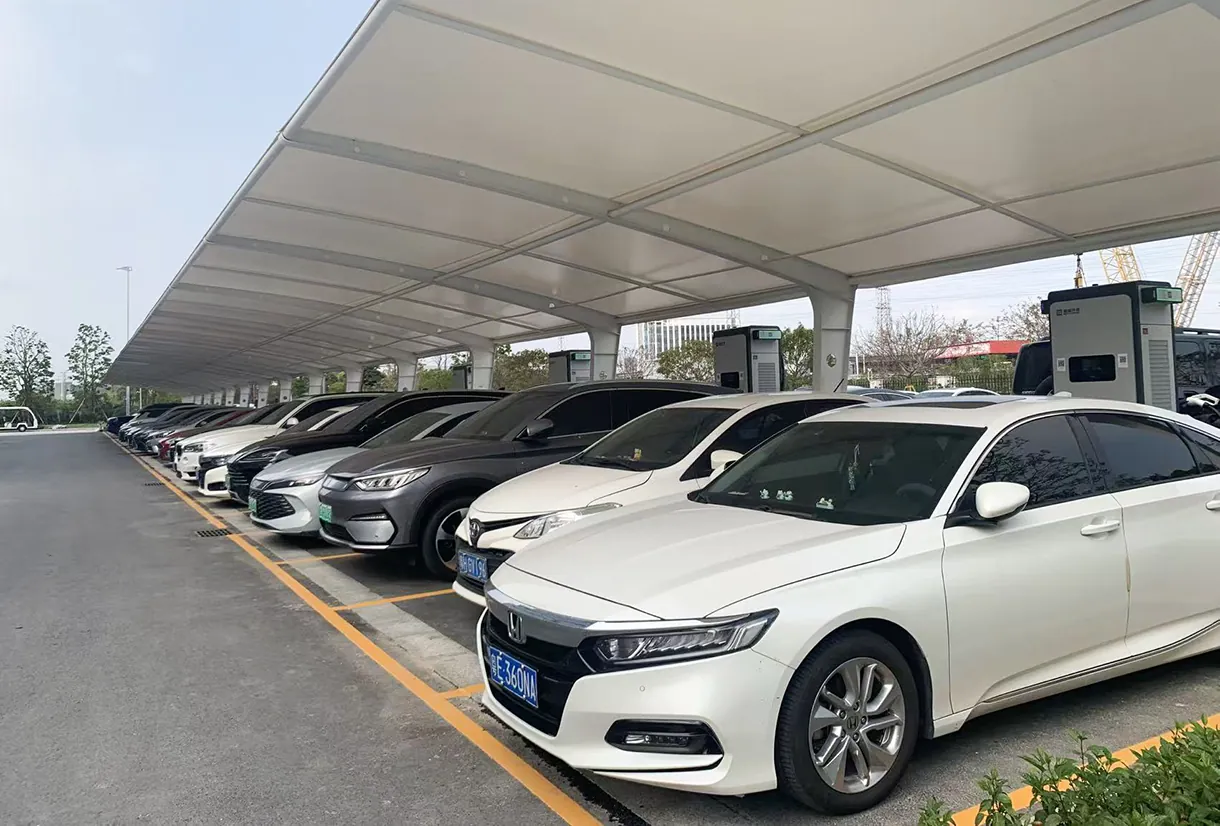
Many people think an EV charging station only needs several chargers. However, chargers are only the final power output devices.
A reliable EV Charging Station Power System requires complete electrical infrastructure to ensure safe operation, stable power supply, and future expansion.
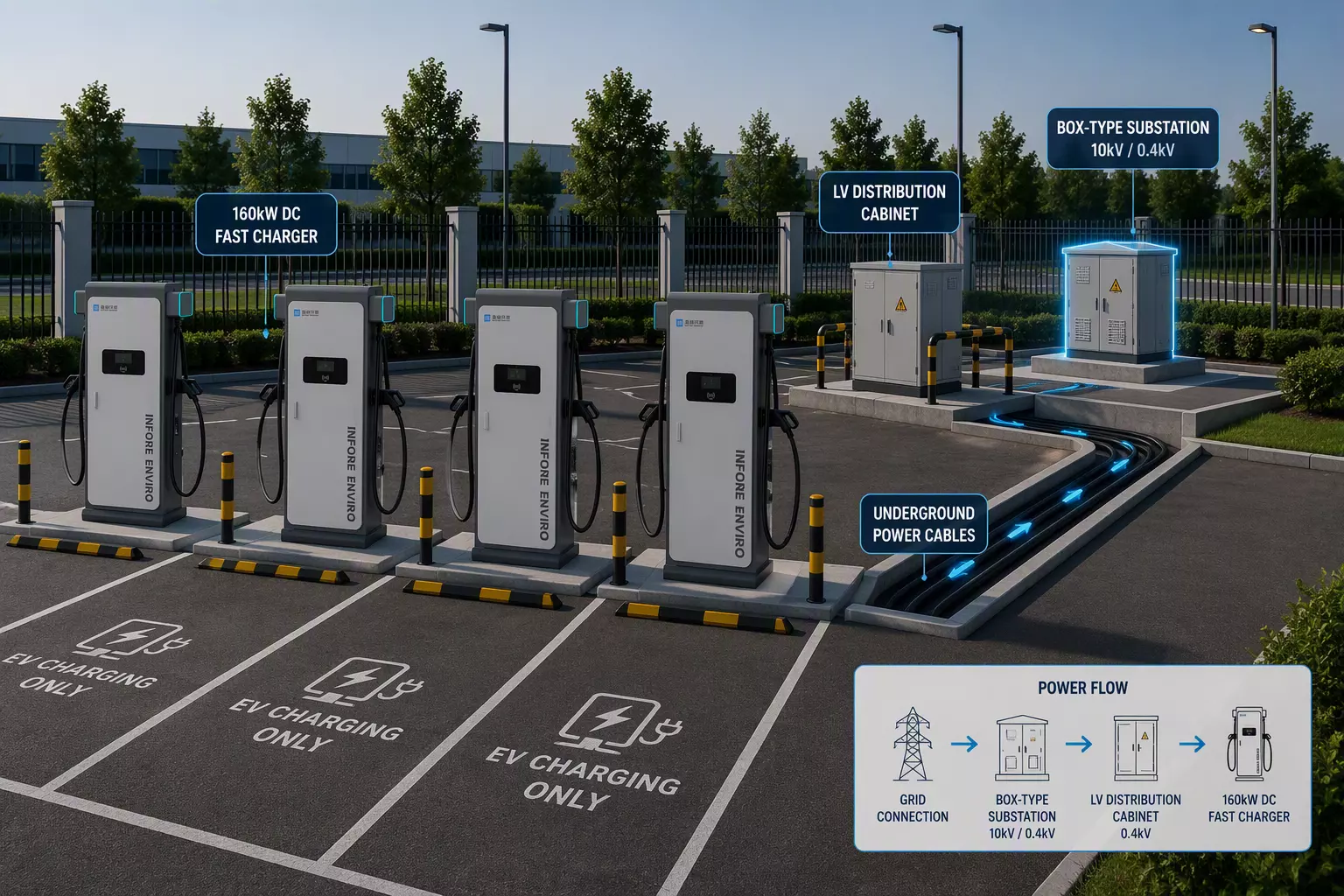
The typical power flow is:
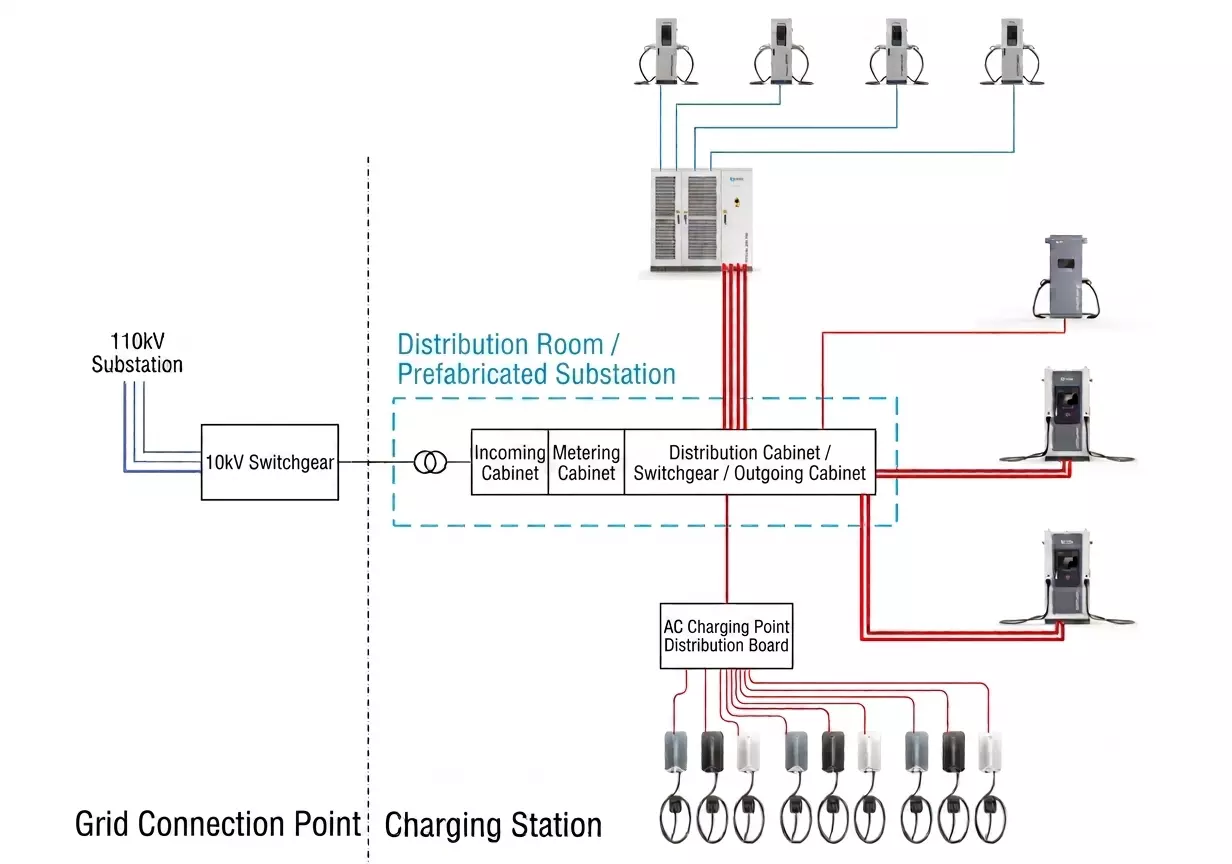
Each part plays a different role in converting and distributing electricity.
Main Equipment in an EV Charging Station Power System
A commercial EV charging infrastructure equipment system usually includes:
| Equipment | Function |
|---|---|
| Box-Type Substation | Converts medium voltage power into low voltage power |
| Transformer | Controls voltage conversion and energy efficiency |
| Low Voltage Distribution System | Distributes electricity to each charger |
| Protection Devices | Prevent electrical faults and equipment damage |
| Power Cables | Transfer electricity safely |
| EV Chargers | Deliver energy to electric vehicles |
A professional EV charging station design requires all components to work together.
1. Box-Type Substation: The Power System Hub
The box-type substation is the core connection point between the utility grid and EV chargers.
It integrates:
- High voltage switchgear
- Transformer
- Low voltage distribution equipment
Its main function is to reduce grid voltage into power suitable for charging equipment.
For large commercial EV charging station projects, selecting the right substation capacity is critical for reliability and future expansion.
2. Transformer: The Energy Conversion Core
The transformer directly affects charging efficiency and system reliability.
Because EV charging loads change quickly, the transformer should handle:
- Peak charging demand
- Long operating hours
- Future load growth
A suitable transformer should provide:
- Low energy loss
- Good heat dissipation
- Stable performance under variable loads
3. Low Voltage Distribution System: Power Distribution Center
The EV charging power distribution system delivers electricity from the transformer to individual chargers.
It includes:
- Distribution cabinets
- Circuit breakers
- Busbars
- Metering devices
- Protection systems
A well-designed EV charging power distribution system helps:
- Isolate electrical faults
- Improve maintenance efficiency
- Monitor energy consumption
4. Power Cables and Connection Systems
Power cables are an important part of the EV charging station components.
Incorrect cable selection may cause:
- Energy loss
- Voltage drop
- Cable overheating
Cable selection should consider:
| Factor | Requirement |
|---|---|
| Cable Size | Match charging power demand |
| Material | Copper for efficiency, aluminum for cost control |
| Installation | Proper protection for underground or outdoor use |
| Expansion | Reserve additional capacity |
5. EV Chargers: The Final Output Device
EV chargers are the final stage of the EV charging station power system.
They convert electrical energy into a form that electric vehicles can use.
Different applications require different charging solutions:
| Application | Recommended Charger |
|---|---|
| Residential Charging | AC EV Charger |
| Workplace Charging | AC Charger / DC Charger |
| Fleet Charging | DC Fast Charger |
| Highway Charging | High-Power DC Charger |
Key Points for Building a Reliable EV Charging Station Power System
A successful charging project should focus on three aspects:
1. Proper Capacity Planning
Avoid:
- Oversized systems that increase investment costs
- Undersized systems that limit future expansion
2. Future Expansion Design
A professional EV charging station design should reserve:
- Transformer capacity
- Cable capacity
- Distribution space
- Communication interfaces
3. Complete System Coordination
The charger is only one part of the solution.
The complete EV charging infrastructure equipment system must work together:
Grid → Transformer → Distribution → Protection → ChargerConclusion
An EV Charging Station Power System is a complete electrical infrastructure, not only a group of charging piles.
A reliable system requires coordination between EV charging station components, including substations, transformers, distribution systems, cables, protection devices, and chargers.
Guangdong Yingtong Zhilian Digital Technology Co., Ltd. provides integrated commercial EV charging infrastructure solutions, supporting professional system design, equipment matching, and complete charging project implementation.
.webp)