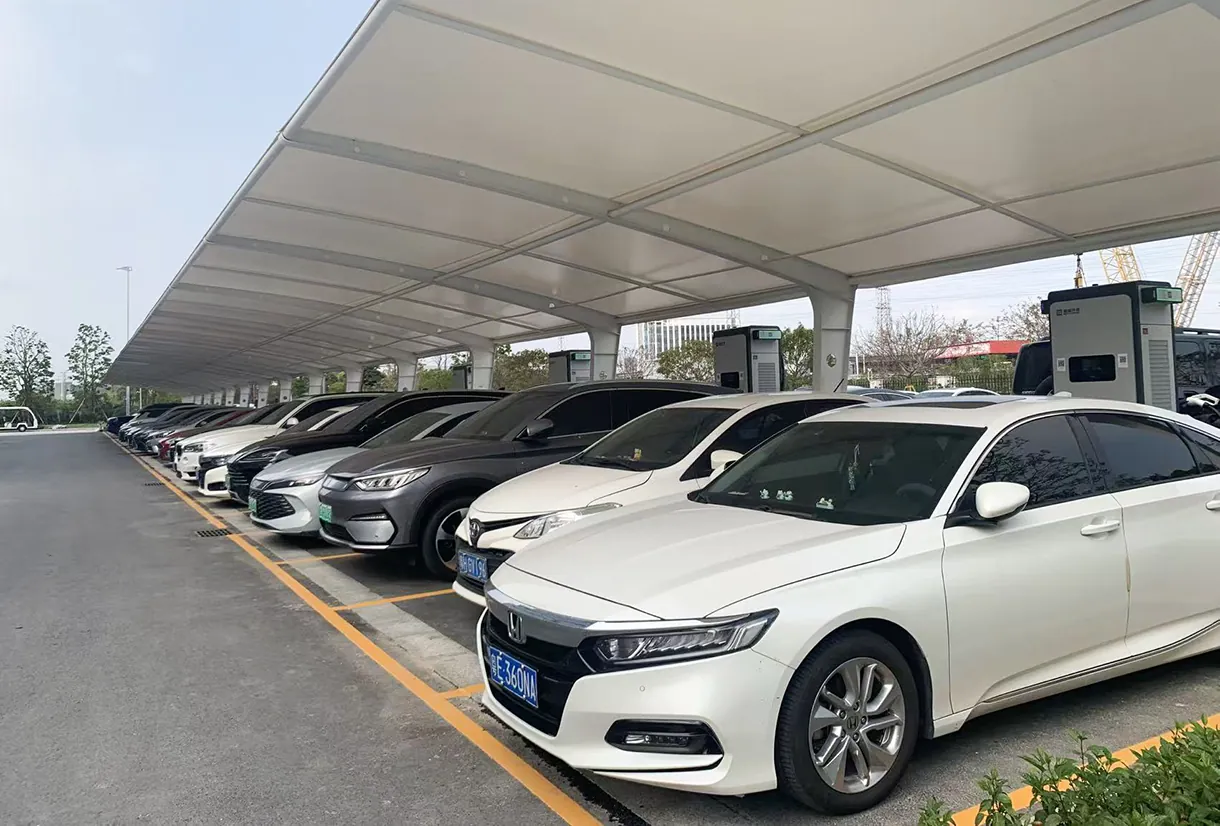
As electric vehicles become more common in commercial transportation, workplace parking, and public charging environments, businesses need charging systems that can support multiple vehicles and efficient space management.
Traditional charging layouts often require separate charging units for different parking spaces. While this approach can work for small installations, larger commercial projects may need solutions that provide more charging access while reducing equipment requirements.
A dual port EV charger allows two electric vehicles to connect to one charging unit at the same time. This design can help improve parking space utilization and provide more flexible charging options for locations such as office buildings, commercial parking areas, fleet facilities, and public charging sites.
When planning EV charging infrastructure, businesses should consider several factors, including vehicle numbers, parking duration, available power capacity, and future expansion needs. The right charging configuration depends on actual operation conditions rather than only charging speed.
How a 22kW Dual EV Charger Supports Balanced Charging Performance
A 22kw dual EV charger is often considered for commercial applications that require a balance between charging efficiency and installation flexibility. Compared with lower-power charging equipment, it can provide higher charging capability while still fitting many workplace and commercial parking environments.
The actual charging performance depends on electrical conditions, vehicle compatibility, and charging management settings. For locations where vehicles remain parked for several hours, such as offices or business facilities, a 22kW system can provide practical charging support during working periods.
Dual-output designs can also improve charging organization. Instead of assigning a separate charger for every vehicle, operators can use one charging unit to serve multiple parking spaces. This can simplify installation planning and provide more flexible usage arrangements.
Key Factors When Selecting Commercial Charging Equipment
Choosing charging equipment requires evaluation of more than output power. Businesses should also consider connector standards, communication functions, safety protection, and maintenance requirements.
Modern charging systems often include smart management features that allow operators to monitor charging status, collect operation data, and manage multiple charging points. Through communication protocols such as OCPP, charging equipment can connect with different management platforms.
Safety design is another important consideration. Commercial charging equipment may operate in outdoor or semi-outdoor environments, so protection against dust, water exposure, and electrical abnormalities is necessary.
Operators should also evaluate whether charging equipment matches regional requirements. Standards and certifications may vary depending on the target market, installation environment, and vehicle specifications.
Improving Charging Management Through Smart Technology
A commercial charging system needs effective management after installation. Without proper monitoring, operators may have difficulty understanding charging usage, equipment status, and maintenance requirements.
Digital charging platforms help businesses manage charging activities more efficiently. Operators can review charging records, monitor connected devices, and organize charging schedules according to actual demand.
For fleet operators and commercial facilities with multiple vehicles, a dual port EV charger combined with smart management functions can provide better visibility into daily charging operations. This combination helps businesses manage charging resources while maintaining flexible vehicle access.
Choosing a Reliable Charging Equipment Supplier
For B2B customers, selecting the right supplier is an important step in developing EV charging projects. Businesses usually evaluate product development capability, manufacturing experience, testing systems, and service support before making purchasing decisions.
INFORE ENVIRO focuses on EV charging equipment development and manufacturing for commercial applications. The company provides AC and DC charging solutions with different power configurations to support various project requirements.
Its Carina Series Commercial Floor-mounted AC EV Charger is designed for commercial charging environments. The product includes 2 Guns Type 2 charging outputs and supports 14kW/42kW models. It also provides communication options including APP, RFID card, 4G, WiFi, Bluetooth, and Ethernet.
The floor-mounted design allows flexible installation in planned parking areas. With IP54 protection, the equipment is suitable for outdoor and semi-outdoor applications where dust and water protection are required.
Manufacturing Capability and Service Support
Stable manufacturing capability is an important factor for commercial charging projects. INFORE ENVIRO has more than 10 years of experience in EV charging equipment development and production.
The company operates a 12,000-square-meter factory with more than 100 technical professionals and over 20 testing personnel. It also has more than 30 patents related to charging technology development.
Through standardized production processes and quality management, INFORE ENVIRO supports customized charging solutions for different commercial applications. The company provides products according to different market requirements, including GB/T, 3C, Type 2, CCS2, CE, CB, and RoHS standards depending on product models.
For long-term operation support, the company provides a two-year warranty and 7×24-hour technical response service. These services help customers handle technical questions after equipment installation.
Building Efficient Commercial Charging Networks
The development of commercial EV charging depends on suitable equipment selection, effective management, and reliable operation planning. Businesses need charging systems that match their vehicle requirements, site conditions, and future growth plans.
A 22kw dual EV charger can provide a practical option for locations that need multiple charging connections with balanced power requirements. By combining dual charging outputs, communication functions, and safety features, this type of system can support different commercial charging scenarios.
With proper planning, a dual port EV charger can become part of a more organized charging network. Selecting equipment based on real application needs allows businesses to improve charging efficiency while creating a flexible infrastructure system.
.webp)