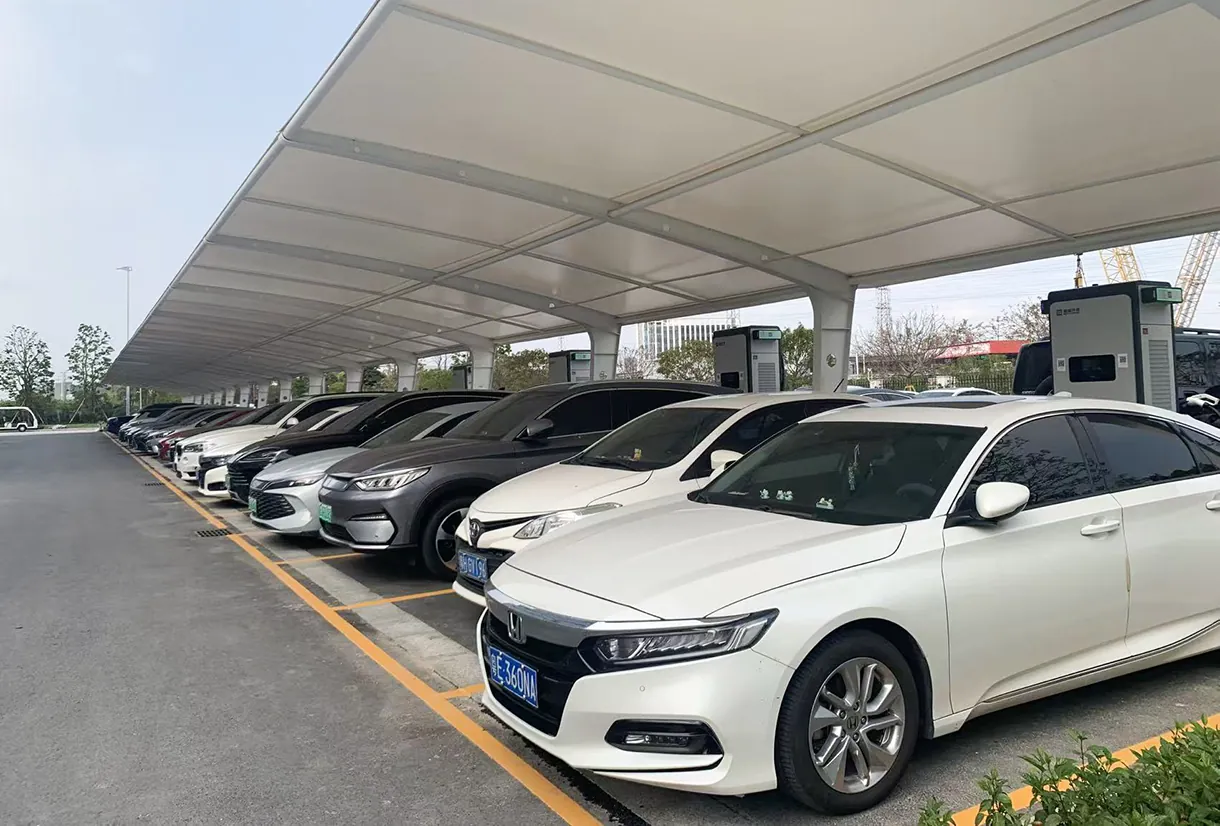
As electric vehicles become more common in workplace transportation, customer travel, and business fleets, charging infrastructure is becoming an increasingly relevant part of commercial facilities.
A commercial Electric Vehicle (EV) charging station can give businesses a practical way to support employees, customers, visitors, and company vehicles while adapting charging capacity and operation to different business needs.
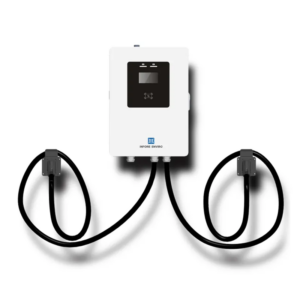
What Business Needs Can Commercial EV Charging Stations Address?
Commercial EV charging stations can serve several groups of users, including employees, customers, visitors, and fleet drivers. The specific role of charging infrastructure depends on how a business operates and how vehicles use its site.
Support Workplace EV Charging
Workplace parking can be a practical location for EV charging because employees may leave their vehicles parked for several hours during the working day. Businesses can provide charging access without requiring employees to make a separate trip to a public charging location.
Provide Charging for Customers and Visitors
Businesses that receive customers or visitors can also use charging stations as part of their on-site facilities. Retail stores, hotels, restaurants, and other commercial locations may provide charging while customers are using the property.
For example, a shopping center may accommodate longer charging sessions, while a business serving customers for shorter periods may have different requirements for charging power and station availability.
Support Business and Fleet Operations
Commercial EV charging can also support company-owned vehicles and business fleets. Delivery vehicles, service vehicles, company cars, and other electric vehicles may require regular charging as part of daily operations.
Fleet charging requires businesses to consider more than individual charging sessions. They may need to coordinate charging schedules, available power, vehicle usage patterns, and the number of vehicles that need to be charged during the same period.
What Benefits Can Commercial EV Charging Stations Provide?
Once the basic business requirements are understood, commercial charging infrastructure can be evaluated according to its operational benefits. These benefits are closely related to charging capacity, application flexibility, and management.
Offer Charging Capacity Suited to Commercial Use
Commercial charging stations can be configured to accommodate charging requirements that differ from those of residential users. Businesses may need to serve multiple vehicles, support higher utilization, or provide charging during defined operating periods.
The appropriate power level should be determined by actual charging demand rather than simply selecting the highest available power. A site with long vehicle dwell times may have different requirements from a location where vehicles need to return to service quickly.
Support Different Commercial Charging Scenarios
Commercial EV charging stations can be used across a range of environments, including office parking, retail properties, hospitality facilities, and fleet depots. These applications may have different requirements for charging access, operating schedules, installation conditions, and user management.
For example, employee charging may focus on predictable daily use, while customer-facing charging may require a more flexible user experience. Fleet charging, meanwhile, may place greater emphasis on scheduled charging and operational coordination.
Enable Connected Charging Management
Charging management can become increasingly important as the number of charging points grows. Businesses may need to monitor charging activity, control user access, review station status, or coordinate charging with available site power.
Connected management functions can provide businesses with greater visibility into charging operations. Depending on the charging system, operators may be able to monitor charging sessions remotely, manage users, and review operational information through a centralized platform.
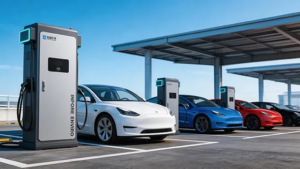
Which Commercial Scenarios Can Use Commercial EV Charging Stations?
The suitable charging solution depends partly on where it will be installed and how vehicles use the site. A commercial EV charger can support different business needs across offices, retail properties, hospitality facilities, and fleet locations, with the appropriate charging setup depending on site conditions and vehicle usage.
Offices and Workplace Parking
Office buildings can provide charging for employees and company vehicles during working hours. Since vehicles may remain parked for several hours, businesses can plan charging around normal employee schedules and available electrical capacity.
The number of charging points can also be considered in relation to parking demand. A business does not necessarily need to provide a charging point for every parking space, particularly when EV adoption and daily charging demand are still developing.
Retail Stores and Shopping Areas
Retail locations can provide charging while customers shop. In this setting, charging infrastructure needs to work alongside parking operations and customer access.
Businesses should consider factors such as average parking duration, expected EV traffic, charger location, and the number of charging points required. The charging setup should also be convenient without interfering with normal vehicle and pedestrian movement.
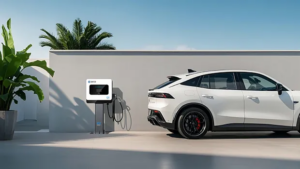
Hotels and Hospitality Facilities
Hotels can provide EV charging for guests whose vehicles remain on the property for extended periods. Overnight parking can create a different charging pattern from short-duration commercial visits.
Hospitality businesses may therefore prioritize convenient access, reliable operation, and straightforward user management. The charging infrastructure should also be considered as part of the property’s overall parking and electrical layout.

Business Fleets and Company Vehicles
Fleet applications can involve more predictable but potentially concentrated charging demand. Vehicles may return to a depot or business location at similar times and need to be ready for the next operating period.
Businesses should therefore evaluate vehicle schedules, daily mileage, charging windows, and the number of vehicles requiring simultaneous charging. These factors can help determine how much charging capacity is needed and whether charging should be scheduled or managed dynamically.
How Should a Business Choose the Right Commercial EV Charging Station?
Choosing a commercial EV charging station requires businesses to consider the complete operating environment rather than focusing on a single specification. INFORE ENVIRO provides commercial EV charging solutions designed for different charging requirements, including high-power DC charging for commercial and public applications.
Identify the Primary Users
The first step is to determine who will use the charging stations. Employees, customers, visitors, and fleet drivers may have different expectations for charging availability, access, and charging time.
A workplace may emphasize predictable employee access, while a retail or hospitality site may need a more customer-oriented charging experience. Fleet operators may instead prioritize scheduling and operational control.
Match Power With Charging Demand
Charging power should correspond to how long vehicles remain parked and how quickly they need to return to operation. Higher power can reduce charging time, but it may also place greater demands on the site’s electrical infrastructure.
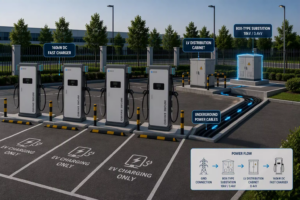
For sites that require higher charging capacity, the INFORE ENVIRO 160kW DC High Power Charging Station provides two CCS2 charging guns and a floor-standing design.
Match the Charger With the Site
The physical environment is another important consideration. Businesses should evaluate available installation space, electrical connections, parking layout, weather exposure, cable management, and the expected operating environment.
The charging station should be positioned so that drivers can access it conveniently while maintaining normal traffic and parking operations. For outdoor installations, the equipment’s environmental protection and operating specifications should also be considered.
Consider Long-Term Management and Support
Commercial charging infrastructure is a long-term operational asset, so businesses should consider how stations will be monitored, maintained, and supported after installation.
Useful considerations may include remote monitoring, user access management, charging records, software functions, maintenance arrangements, and technical support. The INFORE ENVIRO 160kW model supports OCPP 1.6J, 4G, and Ethernet connectivity for connected charging management.
Conclusion
A commercial EV charging station can support workplaces, customer facilities, and business fleets when its charging capacity and configuration match the site’s needs. INFORE ENVIRO provides commercial charging solutions for different application requirements.
Businesses should consider users, charging demand, site conditions, and long-term management when selecting a charging solution. These factors can help businesses choose a commercial EV charging solution that fits their operational needs.
.webp)