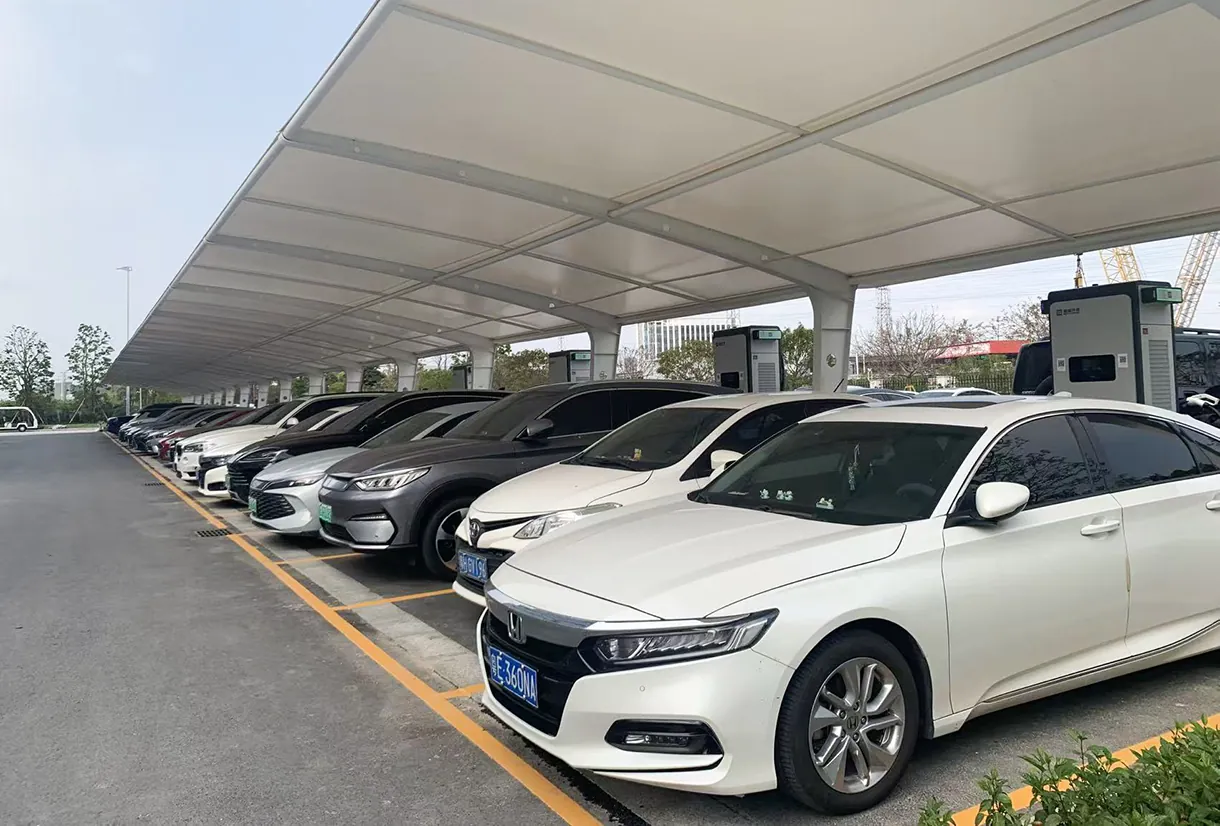
As electric vehicles become more common, convenient and efficient charging infrastructure is increasingly important. Among the available charging solutions, Combined Charging System (CCS) Direct Current (DC) fast chargers can provide higher charging power than conventional AC chargers, making them suitable for applications where drivers need to recharge their vehicles.
Understanding how CCS DC fast charging works and where it can be effectively deployed can help operators plan charging infrastructure around actual travel and charging needs.
What Is a CCS DC Fast Charger?
A CCS DC fast charger is a direct-current charging system that uses the CCS connector to deliver DC power directly to an EV’s battery. Unlike Alternating Current (AC) charging, where the vehicle’s onboard charger converts alternating current into direct current, DC fast charging supplies DC power through the charging equipment, allowing higher charging power and shorter charging times.
How CCS DC Fast Charging Works?
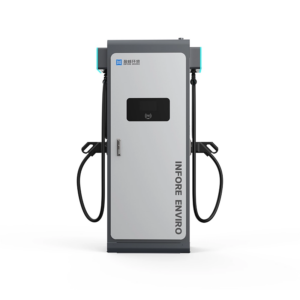
During DC fast charging, the charging station communicates with the vehicle to determine the appropriate charging voltage, current, and power. The charger then converts grid-supplied AC power into DC power and delivers it directly to the vehicle battery through the charging connector.
The actual charging speed depends on several factors, including the charger’s output power, the EV’s maximum DC charging capability, battery state of charge, battery temperature, and charging conditions. Therefore, a higher-rated charger does not necessarily mean that every vehicle will charge at the same power level.
How Does CCS2 Support EV Charging?
CCS2 is the European version of the Combined Charging System and combines the AC charging interface with two additional DC power contacts in a single vehicle inlet. This design allows compatible vehicles to use both AC and DC charging through the same charging interface.
For highway charging infrastructure serving vehicles equipped with CCS2 inlets, CCS2-compatible DC chargers can provide a standardized connection for high-power charging. Operators should still verify vehicle compatibility, local regulations, connector requirements, and charger specifications when planning a charging site.
Why Are CCS DC Fast Chargers Suitable for Highway Corridors?
CCS DC fast chargers are well suited to highway corridors because highway users often need to recharge within a limited stop rather than remain at a location for several hours. Charging infrastructure along major travel routes therefore needs to balance charging speed, accessibility, vehicle turnover, and site capacity.
Reduce Charging Time for Long-Distance Travel
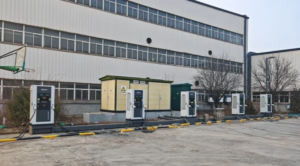
Long-distance EV travel requires drivers to manage available battery range between destinations. DC fast chargers can add a meaningful amount of driving range during a relatively short stop, depending on the vehicle and charging conditions.
This makes them particularly useful at locations where drivers already stop for rest, food, fuel alternatives, or other travel services. Faster charging can also reduce the time vehicles occupy charging spaces, although the actual charging duration varies by vehicle and battery condition.
Support Convenient Charging Between Major Destinations
Strategically located charging stations can provide drivers with additional options between cities, regional destinations, and transportation hubs. This is especially relevant for EV drivers who need to plan charging around available range, road conditions, traffic, and planned stops rather than relying only on charging at their origin or destination.
Serve Different Highway Charging Demands
Not every highway charging location has the same requirements. A busy service area may need multiple high-power charging points, while a smaller rest stop may require a more limited number of chargers.
Highway corridors can also serve different vehicle groups, including private passenger cars, ride-hailing vehicles, commercial vehicles, and fleet vehicles. Operators should therefore consider traffic patterns, vehicle types, dwell time, and expected charging demand when determining the appropriate charging configuration.
Where Can CCS DC Fast Chargers Be Deployed Along Highway Corridors?
CCS DC fast chargers can be installed at various locations along highway corridors, provided that the site has suitable electrical infrastructure, vehicle access, space, and operating conditions.
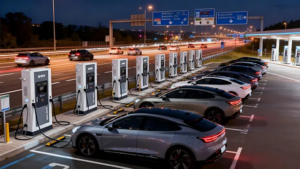
Highway Service Areas and Rest Stops
Highway service areas and rest stops are natural locations for DC fast charging because drivers already use these facilities for breaks. Charging can take place while drivers use restrooms, eat, shop, or rest.
These sites may benefit from multiple charging points because several vehicles can arrive within a short period. Operators should assess parking layout, traffic flow, charger placement, and available electrical capacity before installation.
Transportation and Logistics Stops
Transportation and logistics locations can also require DC fast charging, particularly where commercial vehicles operate on fixed routes or have limited time available for charging.
For these applications, operators may need to consider vehicle operating schedules, daily mileage, charging windows, simultaneous charging demand, and charging power. Commercial sites may require a different charging configuration from passenger-car charging stations at public rest areas.
Commercial Parking and Travel Facilities
Hotels, shopping centers, restaurants, and other commercial facilities located near major highways can provide additional charging opportunities. These locations allow EV drivers to combine charging with an existing activity rather than making a separate charging-only stop.
The appropriate charger configuration depends on expected parking duration and user demand. Locations where drivers typically stay for longer periods may not require the same charging capacity as high-turnover highway charging hubs.
How Should Operators Plan CCS DC Fast Charging Along Highway Corridors?
Operators should evaluate traffic, charging demand, electrical infrastructure, physical site conditions, and long-term management requirements together. INFORE ENVIRO provides DC charging solutions designed for public and commercial charging applications, offering options for different highway charging requirements.
Assess Traffic and Charging Demand
Traffic volume is an important starting point for estimating charging demand. Operators should examine vehicle flow, seasonal traffic changes, nearby charging stations, local EV adoption, and the types of vehicles expected to use the site.
The expected number of charging sessions and peak demand can then help determine how many charging points are needed. Planning for future demand is also important because highway charging infrastructure may need to accommodate increasing EV use over its operating life.
Determine Charging Power and Connector Capacity
Charger output should match the vehicles and charging requirements expected at the site. Operators should consider the maximum DC charging capabilities of target vehicles, expected dwell time, simultaneous charging demand, and available connector standards.
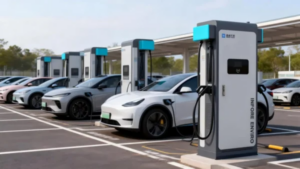
For CCS2-focused sites, the charger and connector configuration should be compatible with the vehicles and regional requirements being served. For example, INFORE ENVIRO’s 160 kW CCS2 fast charger features dual CCS2 charging guns, providing a practical option for sites that need relatively high charging power and multiple charging connections.
Evaluate Grid Capacity and Installation Conditions
High-power DC charging can place substantial demand on the local electrical system. Before installation, operators should assess available grid capacity, transformer and distribution requirements, cable routing, protection systems, and any necessary infrastructure upgrades.
Physical conditions are equally important. The site should provide sufficient space for chargers, vehicles, pedestrians, maintenance access, and safe traffic movement. These considerations become more important as the number and power of charging points increase.
Consider Outdoor Operation and Charging Management
Highway chargers are generally installed in outdoor environments, so equipment selection should account for temperature, rain, dust, mechanical protection, and other local environmental conditions.
Charging management is also important for larger sites. Network connectivity and remote monitoring can help operators track equipment status, identify faults, manage charging sessions, and support maintenance. INFORE ENVIRO‘s 160 kW DC charging station supports OCPP 1.6J and 4G/Ethernet connectivity, which can support integration with networked charging management systems.
Conclusion
CCS DC fast chargers provide a practical way to support faster and more convenient EV charging, particularly where drivers need to recharge during relatively short stops. Their high-power DC charging capability and CCS2 compatibility make them suitable for highway corridors, where charging infrastructure needs to support long-distance travel and steady vehicle turnover.
For highway charging projects, operators should consider factors such as traffic and charging demand, charging power, connector capacity, site conditions, grid capacity, and charging management.
.webp)