Airport parking creates a special charging problem because vehicles may remain on site for many hours or several days. Charging zones therefore need more than high power. Operators should match charger types with parking duration, expected vehicle turnover, electrical capacity, and traffic flow.
A practical charging layout can reduce unnecessary vehicle movement and help drivers use charging that matches how long they actually stay. It can also separate long-stay vehicles from faster-turnover traffic, which makes parking circulation and charger use easier to manage.
Match Charging Power to Parking Duration
Long-term parking does not always require the fastest charging rate. Vehicles that remain for many hours can often use lower-power charging because there is enough time to recover energy before the driver returns. This can reduce pressure on the site electrical system and allow more charging points to share available capacity.
Fast charging still has a role, but it should serve vehicles with shorter dwell times or operational needs. Rental fleets, airport service vehicles, taxis, and logistics vehicles may need faster turnaround than private cars left in long-term parking.
For project planners, we recommend separating charging needs by dwell time. This avoids placing every vehicle on high-power equipment and helps the charging zone use electrical capacity more efficiently.
Parking Layout Affects Charging Efficiency
We plan charger placement around how vehicles enter, park, and leave the area. Long cable runs, crossing lanes, and poor equipment positioning can make daily operation more difficult. Charging spaces should also leave enough room for drivers, maintenance staff, and service access.
We also treat cable reach as a practical design factor. Chargers should be positioned so that cables can connect to vehicles without crossing walking paths or creating obstacles. Clear markings can also help drivers identify charging spaces and reduce misuse.
In larger car parks, we recommend grouping chargers into defined zones to simplify electrical distribution and maintenance. It also makes future expansion easier because additional equipment can be planned around existing cable routes and distribution points.
Use Fast Charging Where Turnover Is Higher
A CCS DC fast charger is more suitable for locations where vehicles need shorter charging sessions. In an airport environment, this may include transport fleets, commercial vehicles, or areas close to pickup and service operations.
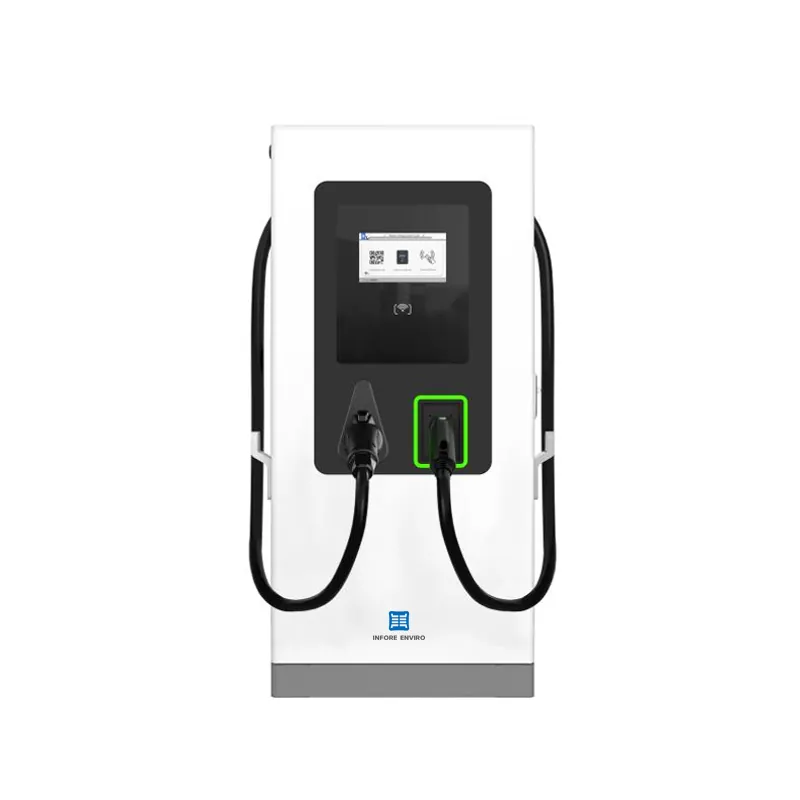
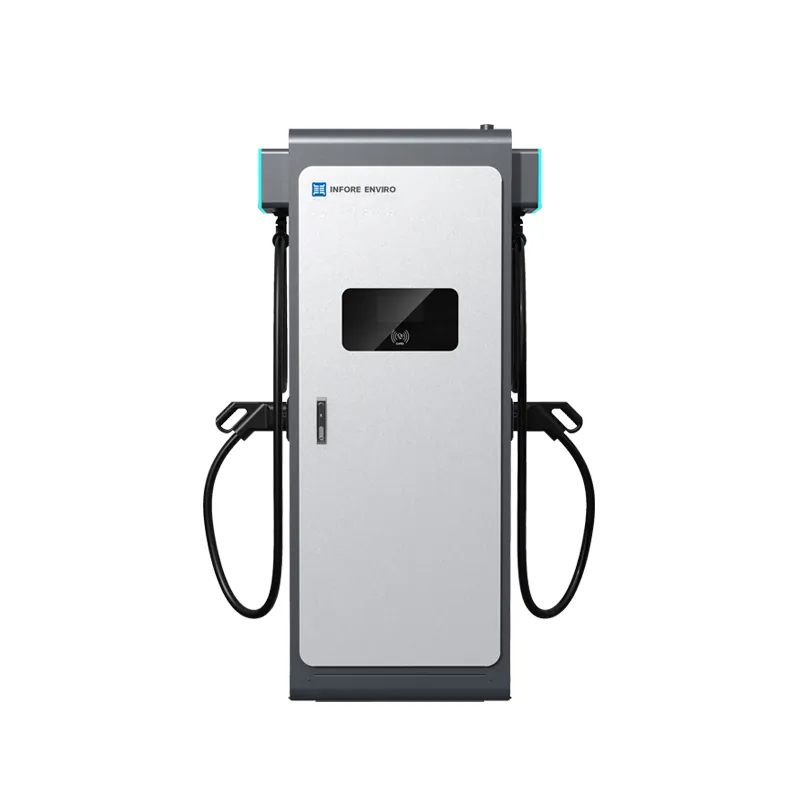
At INFORE ENVIRO, we use this distinction when considering product applications. Our 160kW DC High Power Charging Station is a floor-standing unit designed for public and commercial use. It supports two CCS2 charging guns and is intended for high-traffic charging conditions.
The unit includes a 7-inch LCD screen, OCPP 1.6J support, an IP54 enclosure, and CE and RoHS certifications. Its 160kW output makes it more suitable for fast-turnover areas than for vehicles that remain parked for several days.
Load Management Matters Across the Site
We plan airport charging projects around total electrical load rather than individual charger ratings. If many vehicles begin charging at the same time, the combined demand can affect upstream distribution equipment and operating costs.
We recommend setting charging priorities, grouping chargers by use case, and using communication platforms to monitor active sessions. OCPP-compatible systems can support charger status monitoring and help operators manage connected equipment across the site.
For airport EV charging, this is useful because long-term parking creates flexible charging windows. Vehicles do not all need full charging power immediately, so charging schedules can be adjusted around available capacity and expected departure times.
Maintenance and Weather Protection Need Early Planning
Because airport parking facilities often operate continuously, we consider inspection and repair access during design. Maintenance teams need clear space around equipment, visible identification, and practical access to cables, screens, and electrical connections.
Outdoor or semi-open parking areas also expose equipment to dust and rain. Enclosure protection should match the installation environment, and drainage around the charger base should prevent water accumulation.
Reliability also depends on testing and product development. INFORE ENVIRO has more than 100 technical personnel, more than 20 testing staff, over 30 patents, and about 25% R&D investment. These capabilities support product development for different commercial charging conditions.
Combine Long-Stay and Fast-Charge Areas
We do not design an efficient airport charging zone around one charger type. Long-term parking areas can use charging equipment suited to extended dwell times, while high-turnover areas can use a CCS DC fast charger for vehicles that need quicker energy recovery.
This mixed approach can reduce unnecessary demand on the electrical system. It also allows project teams to match charging equipment with the actual behavior of drivers, fleets, and airport service vehicles.
We also make the physical layout reflect this separation. Long-stay chargers can be placed deeper within parking areas, while faster charging points can be located where vehicles can enter, charge, and leave without disrupting long-term parking traffic.
Building a Practical Long-Term Charging Strategy
We see efficient airport charging as a process of matching equipment with real parking behavior. Dwell time, vehicle type, power availability, charger placement, cable management, platform communication, and maintenance access all need to be reviewed together.
For long-term parking, the goal is not to maximize charging power at every space. A balanced design uses slower charging where time is available and reserves higher-power equipment for vehicles that need faster turnover. This approach can make airport charging zones easier to operate, expand, and maintain over time.