Commercial charging sites serve drivers with different parking durations and charging needs. An AC DC charger that combines AC and DC charging can help businesses accommodate vehicles that need faster charging and those that remain parked for several hours. For hotels, office buildings, retail centers, and public parking facilities, this integrated approach supports charging plans based on actual site usage rather than a single charging speed.
What Is an AC DC Charger for Commercial Charging Sites?
An integrated AC DC charger combines alternating current (AC) and direct current (DC) charging functions in one unit, allowing a site to offer different charging options through shared equipment.
With AC charging, the vehicle’s onboard charger converts incoming AC electricity into DC for the battery. With DC charging, conversion takes place inside the charging equipment, allowing DC power to be delivered to the vehicle’s battery system. Actual charging speed depends on equipment output, vehicle capability, battery conditions, and available electrical supply.
How the Integrated System Works
An integrated charger provides AC and DC charging outputs within one unit. This arrangement can support different charging requirements at the same location without requiring every vehicle to use the same charging method.
For example, a driver stopping briefly at a retail site may prefer DC charging, while a hotel guest leaving a vehicle parked overnight may find AC charging sufficient. The available power and connector configuration determine which vehicles can use each output. Operators should verify these details against their expected vehicle mix before installation.
Why Do Commercial Sites Need Both AC and DC Charging?
Combining AC and DC charging can help commercial sites serve drivers with different schedules. AC charging generally suits longer parking periods, while DC charging can support vehicles that need to recharge within a shorter window.
Commercial Locations With Mixed Charging Needs
- Hotels and hospitality venues: Guests may park for several hours or overnight, while other visitors may need faster charging during shorter stays.
- Office buildings: Employees can use AC charging during the workday, while visitors or service vehicles may benefit from DC charging when time is limited.
- Retail centers: Shoppers have varying visit lengths, making a combination of charging options useful for different parking patterns.
- Public parking facilities: Operators can serve both longer-stay parkers and drivers who need to resume their journeys sooner.
The appropriate configuration depends on traffic, dwell time, electrical capacity, and investment priorities. A site dominated by overnight parking may prioritize AC capacity, whereas a busy retail location may need some faster DC charging capability.
| Consideration | AC Charging | DC Fast Charging | Integrated AC/DC Charging |
| Typical use | Longer parking periods | Shorter charging stops | Mixed-duration visits |
| Power conversion | Inside the vehicle | Inside the charging equipment | Supports both methods |
| Suitable settings | Workplaces, hotels, long-stay parking | High-turnover sites and fleet operations | Retail, hospitality, offices, mixed-use parking |
| Main planning factor | Parking duration and vehicle AC capability | Vehicle DC capability and site power | Demand for both charging options |
How Does an AC DC Charger Support EV Destination Charging?
EV destination charging allows drivers to charge while visiting a place for another purpose, such as staying at a hotel, attending work, shopping, or using a public facility. An integrated AC/DC charger can support this model by offering charging options for different lengths of stay.
Matching Charging Power to Parking Duration
Charging power should reflect how long vehicles typically remain connected and how much energy they need during that period. Vehicles parked for several hours may be adequately served by AC charging, while those with shorter stays may benefit from DC charging.
Operators should examine parking turnover, typical visit duration, expected energy demand, and the number of vehicles charging simultaneously. Higher rated power alone does not guarantee faster charging for every vehicle, because each EV has its own charging limits. The U.S. Department of Transportation also recommends considering charging speed, vehicle dwell time, and installation and operating costs when selecting charging equipment.
Destination charging also depends on user convenience. Clear instructions, accessible parking spaces, compatible connectors, and straightforward payment or access arrangements can make charging easier to use.
What Features Should Businesses Evaluate in an AC DC Charger?
Businesses should evaluate connector compatibility, power configuration, electrical requirements, load management, connectivity, and maintenance support before selecting an AC DC charger.
Compatibility, Load Management, and Connectivity
Vector Series integrated AC/DC charging station lists CCS2/CCS1 for DC charging and Type 2 for AC charging. Buyers should verify that the selected configuration matches the vehicles and regional requirements at their intended site.
Electrical capacity is equally important. Operating AC and DC outputs at the same site requires planning for available supply and simultaneous charging demand. Dynamic load balancing, where supported and properly configured, can help manage power distribution across charging equipment. Businesses should assess grid capacity and installation requirements with qualified professionals before deployment.
Network communication, remote monitoring, and diagnostics may also help operators oversee equipment and respond to issues. The appropriate features depend on whether the site is privately managed, open to visitors, or operated as part of a wider charging network.
How Does INFORE ENVIRO Support Mixed-Use Charging Sites?
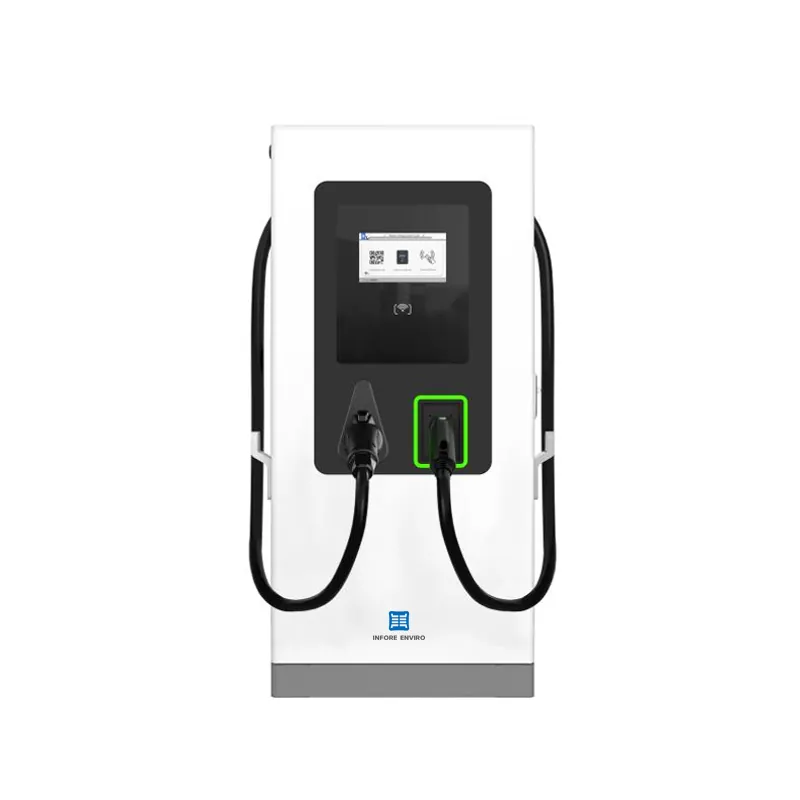
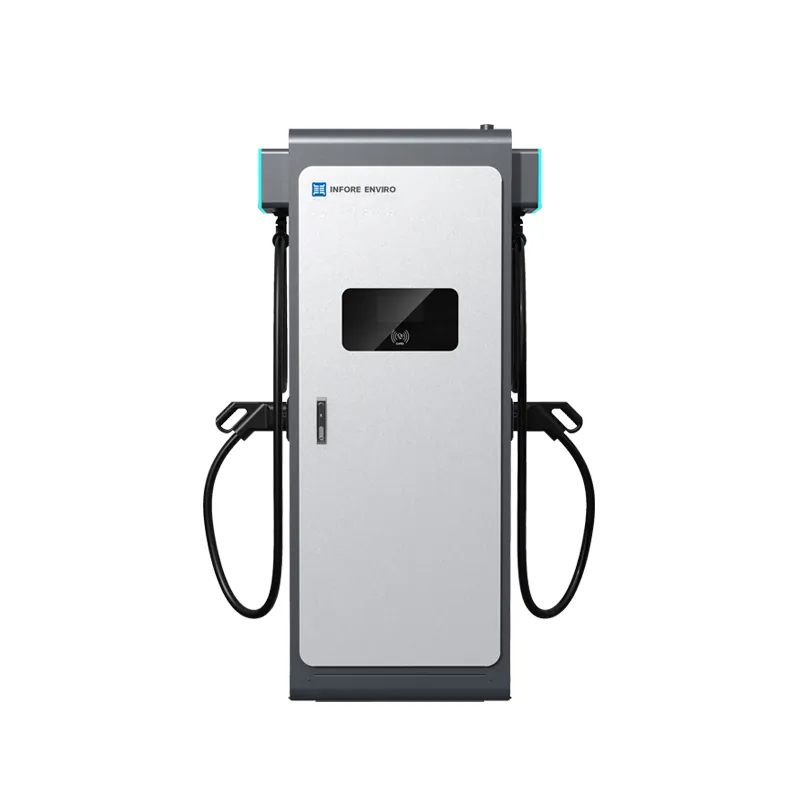
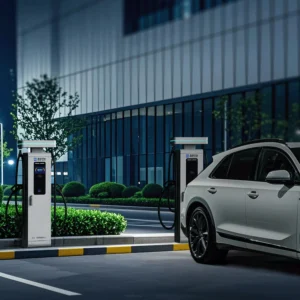
INFORE ENVIRO‘s Vector Series integrates 60 kW DC charging and 22 kW AC charging in a single unit, making it suitable for commercial sites serving vehicles with different parking durations. The station offers CCS2/CCS1 options for DC charging and a Type 2 connector for AC charging, allowing operators to accommodate different charging requirements within one installation.
Listed features include a 10.1-inch touchscreen, IP54 protection, scheduled and smart charging, and dynamic load balancing. The product page also lists 4G, Wi-Fi, Ethernet, and Bluetooth connectivity, along with OCPP 1.6J support and OCPP 2.0 as an option.
These specifications may be relevant to businesses planning charging facilities for workplaces, retail locations, hospitality venues, and public parking. Buyers should confirm current specifications, site requirements, and regional compatibility with the supplier before procurement. Businesses can also explore INFORE ENVIRO’s EV charging solutions to review its broader equipment range.
What Should Businesses Consider Before Installation?
Before installing an integrated AC/DC charging station, businesses should review expected demand, electrical infrastructure, parking patterns, connector requirements, and ongoing operating needs.
- Estimate vehicle numbers, dwell times, and daily charging demand.
- Confirm connector compatibility and vehicle charging limits.
- Assess grid capacity, installation costs, and simultaneous charging loads.
- Review software, maintenance arrangements, warranty, and supplier support.
Matching equipment capabilities to actual operating conditions helps businesses plan destination charging infrastructure around vehicle needs, available power, and parking duration.