Public charging hubs serve drivers with different vehicles, charging needs, and parking times. For operators, the charger must handle repeated use, stable power delivery, and practical site management. Connector compatibility also matters because public stations often serve vehicles from different manufacturers. In this setting, choosing the right DC charging standard can affect daily traffic flow, equipment utilization, and future expansion.
Public Hubs Need Broad Vehicle Compatibility
Public charging sites cannot be planned around one vehicle model. Operators need equipment that can serve common charging interfaces in their target market. CCS2 is widely used in Europe and other regions where the Combined Charging System is part of the public charging network.
For a hub operator, this reduces the risk of installing equipment that matches only a limited group of vehicles. It also makes procurement decisions easier when the same site needs to support passenger cars, commercial vehicles, taxis, or fleet units.
We also look at connector format together with charging power. A CCS DC fast charger should match the electrical design, expected vehicle mix, and average dwell time. This approach is more practical than choosing equipment based only on a high power number.
Charging Speed Affects Hub Throughput
Public charging hubs often depend on vehicle turnover. When charging sessions are too long, queues can form during busy periods. Higher-power DC charging can shorten the time a compatible vehicle needs to stay connected, which helps the same charger serve more sessions during the day.
However, power should still match real site conditions. Grid capacity, transformer size, cable design, parking layout, and vehicle acceptance rate all affect actual charging performance. A 160kW unit, for example, should be evaluated together with upstream distribution capacity.
We recommend treating charger power as part of the whole site plan. This keeps project teams focused on usable output rather than headline specifications alone. Traffic patterns should also be reviewed by hour, because peak arrival periods may create very different charging demand from the daily average.
Dual-Gun Design Supports Busy Locations
High-traffic public hubs can benefit from dual-gun charging equipment. Two charging guns provide more flexibility when vehicles arrive at similar times or when operators need to organize different parking bays around one charger.
The value of dual-gun design also depends on site layout. Cable reach, parking direction, protective barriers, and pedestrian routes should be considered before installation. These details can reduce cable crossing and improve daily access for drivers and maintenance staff.
For fleet depots, logistics hubs, and airports, this type of layout can be especially useful because vehicle arrivals may follow fixed operating windows. Charging equipment therefore needs to fit traffic planning as well as electrical requirements.
A Practical 160kW Configuration
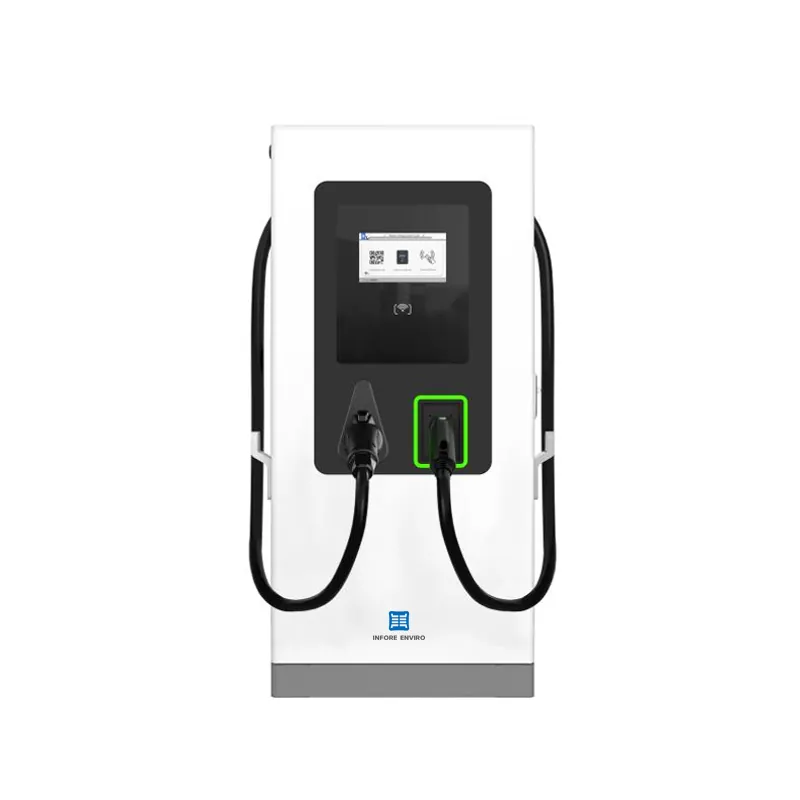
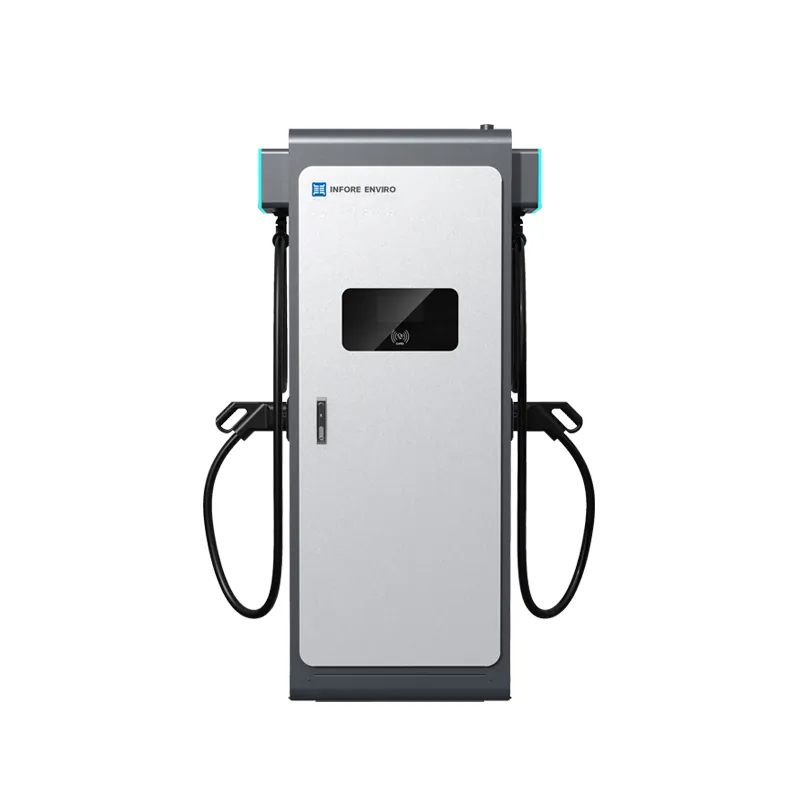
For projects that need higher-power public charging, INFORE ENVIRO provides a 160kW DC High Power Charging Station. The unit is floor-standing and uses two CCS2 charging guns. It is intended for public and commercial applications, including fleet depots, logistics hubs, and airport charging.
The charger includes a 7-inch LCD screen, supports OCPP 1.6J, and carries an IP54 protection rating. It also has CE and RoHS certifications. These details are relevant for project teams reviewing interface, communication, outdoor protection, and compliance requirements.
As a CCS DC fast charger, this model is designed for high-traffic charging under EU EV charger standard requirements. The configuration gives operators a clear reference when they need 160kW output, dual-gun operation, and standard backend communication in one pedestal unit.
OCPP Matters for Daily Operation
Public charging equipment is not only a power device. Operators also need visibility into charger status, charging sessions, faults, and usage records. This is where protocol compatibility becomes important.
OCPP allows chargers to communicate with a management platform through a standard protocol. For B2B operators, this can simplify backend integration and reduce dependence on a closed communication structure.
The practical value is operational. A site manager can use platform data to review charger availability, identify abnormal sessions, and support maintenance planning. This becomes more important as the number of chargers at one site increases.
Outdoor Protection and Compliance Need Attention
Public chargers are often installed in open parking areas, roadside spaces, or transport facilities. Dust and rain exposure should therefore be considered during equipment selection. An IP54-rated enclosure provides a defined level of protection against dust ingress and water splash.
Certification is another procurement point. CE and RoHS documentation can support project review for relevant markets, while connector and charging standards should match local regulations and vehicle requirements.
Our R&D structure also supports product development and testing. INFORE ENVIRO has more than 100 technical personnel, over 20 testing staff, more than 30 patents, and reports 25% R&D investment. These resources support product development, customization, and verification work for B2B charging projects.
Building a More Practical Public Charging Hub
A public charging hub needs more than high output power. Vehicle compatibility, charging speed, dual-gun access, backend communication, outdoor protection, and site layout all affect long-term operation.
For operators planning European-standard public charging, a CCS2 fast charger can provide the connector compatibility and DC charging structure needed for mixed vehicle traffic. When this is combined with suitable site power, communication, and maintenance planning, the charging hub can be easier to operate and scale as demand changes.