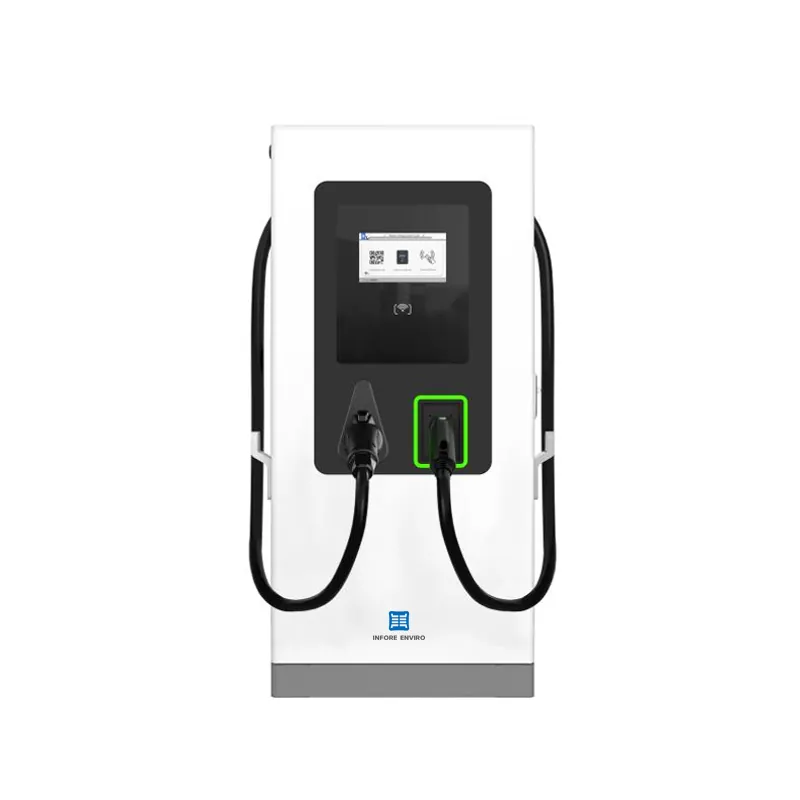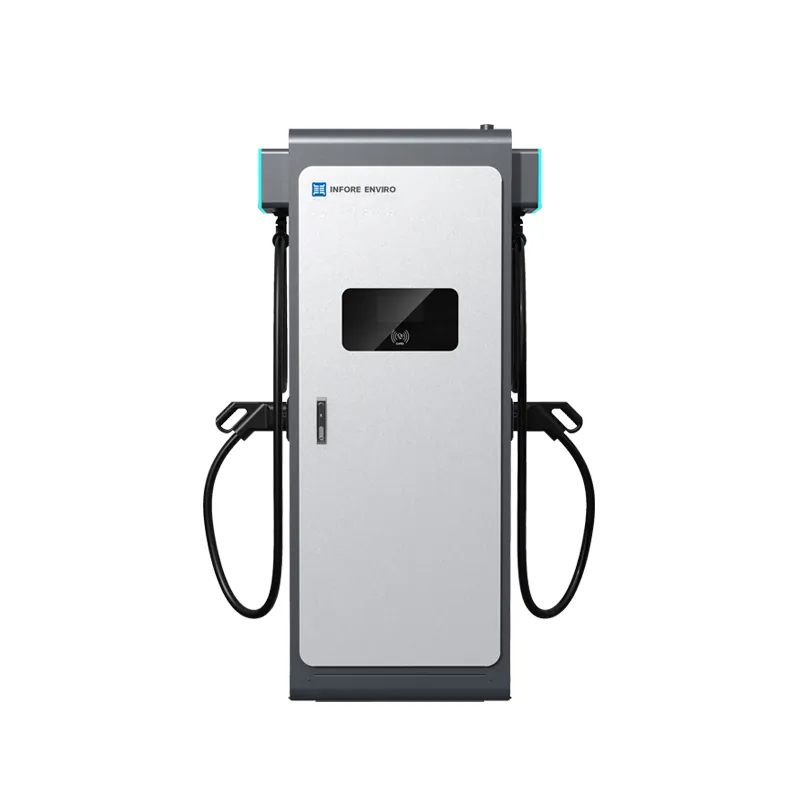
Fleet operators, commercial charge-point operators (CPOs), and logistics managers encounter distinct engineering trade-offs when transitioning from slow alternating current (AC) destination charging to high-voltage direct current (DC) systems. Clarifying what is dc fast charging begins with understanding how power enters an electric vehicle’s battery pack. While standard AC destination points supply line current directly to the vehicle’s onboard converter, direct current hardware bypasses vehicle conversion limits altogether.
By converting three-phase alternating current from the local grid into direct current inside the stationary cabinet, direct current stations feed electricity straight into the vehicle’s traction battery. This technical architecture eliminates the bottleneck of vehicle-side rectifiers, shrinking recharge intervals from multiple hours down to under thirty minutes. For high-throughput environments like logistics hubs and municipal transit depots, specifying a certified Level 3 DC fast charger is essential to keep commercial fleets running on tight delivery schedules.
Technical Architecture of a Level 3 DC Fast Charger
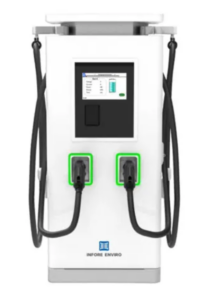
The core distinction of Level 3 direct current infrastructure lies in its internal power electronics. Inside the heavy-duty enclosure, modular rectifiers convert incoming alternating grid current into regulated high-voltage direct current. These modular power blocks can be stacked in parallel within a single housing, enabling flexible output scaling across commercial sites.
Available power configurations span diverse commercial application tiers. For light commercial fleets, retail hubs, or municipal car parks, compact DC outputs of 30 kW, 40 kW, and 44 kW provide rapid turnaround without overburdening local grid capacity. For high-demand transit corridors, heavy freight depots, and highway rest plazas, heavy-duty DC architectures scale across 60 kW, 120 kW, 160 kW, 180 kW, 240 kW, 360 kW, and 480 kW outputs.
Multi-standard configurations allow site hosts to service varied commercial vehicle architectures simultaneously. Stations can incorporate dual-port DC split systems or hybrid architectures, such as cabinets pairing a DC 60 kW rapid port alongside an auxiliary AC 22 kW socket. This hybrid approach enables simultaneous fast replenishment and scheduled AC maintenance charging from one single physical footprint.
Ingress Ratings and Environmental Ruggedization
Because high-voltage direct current equipment dissipates substantial thermal energy during full-load power transfer, physical build quality and enclosure sealing are paramount. Commercial units operate outdoors across extreme temperatures, facing exposure to windblown dust, humidity, salt spray, and rainstorms. Specifying appropriate Ingress Protection (IP) ratings ensures uninterrupted operational continuity and prevents moisture damage to sensitive power modules.
According to our verified factory engineering specifications, dual-connector 160 kW DC units and integrated DC60kW/AC22kW stations feature a robust IP54 rating. This rating certifies that the cabinet prevents ingress from airborne dust particles and shields internal electronics against water splashes from any direction. For AC wallbox deployments, our dual-gun 14 kW to 42 kW models carry IP54 protection, our standalone 11 kW socket units feature IP55 ratings, and self-developed 7 kW tethered units achieve IP65 sealing.
Beyond mechanical ingress protection, our industrial direct current stations integrate comprehensive electrical safety topologies. These include automated over-voltage, under-voltage, short-circuit, ground-fault, lightning surge, and thermal overload protections. Integrated insulation monitoring units continuously measure circuit resistance, instantly cutting high-voltage contactors if a leakage fault occurs during high-amperage charging sessions.
Selecting a CCS2 Fast Charger for Open Protocol Networks
Regional connector compatibility defines long-term asset utility for international charging networks. For European, Middle Eastern, and select Asia-Pacific markets, deploying our certified CCS2 fast charger guarantees interoperability across passenger cars, utility vans, and heavy commercial trucks. Combined Charging System Type 2 inlets accommodate both single-phase/three-phase AC and high-voltage DC through a unified vehicle socket interface.
For markets adhering to alternative regulatory environments, our equipment must satisfy regional technical standards. Our hardware built for Asian installations supports China GB/T standards and carries mandatory CCC (3C) certifications. Meanwhile, our units destined for European cross-border operations feature EU Type 2 and CCS2 compatibility alongside full CE, CB, and RoHS compliance, confirming strict electromagnetic compatibility and environmental material safety.
Software architecture is equally vital to operational profitability. Commercial direct current hardware integrates Open Charge Point Protocol (OCPP) firmware, enabling frictionless communication with central management platforms. OCPP compliance allows operators to manage dynamic pricing, conduct remote diagnostics, execute firmware updates, and switch billing software vendors without stranding existing field hardware.
Furthermore, OCPP-enabled smart load management dynamically distributes available grid capacity across adjacent bays. In a multi-station installation, the backend system throttles output power according to peak utility tariffs or instantaneous building loads. This intelligent power balancing prevents costly demand charges from local distribution utilities while maximizing site throughput.
Spec Sheet Checklist for Distributors
Evaluating hardware suppliers requires examining factory engineering depth and delivery reliability alongside unit specifications. Working with an experienced OEM/ODM partner gives distributors access to custom enclosure branding, bespoke cable lengths, tailored graphic interfaces, and flexible hardware configurations. Sourcing directly from an established production facility eliminates intermediary price inflation and ensures stringent quality control over every modular component.
Manufacturing infrastructure dictates lead time predictability for large turnkey rollouts. Operating an expansive 12,000 square meter production facility, seasoned manufacturers maintain steady production cycles of 30 to 45 days. This manufacturing capability allows project contractors and CPOs to meet strict commercial deployment milestones without unexpected delays.
With 10 years in EVSE manufacturing, INFORE ENVIRO designs and produces self-developed AC wallboxes from 7 kW to 22 kW alongside high-power DC fast charging systems up to 480 kW. Our in-house assembly and firmware engineering ensure end-to-end component traceability across all high-voltage product lines.
Long-term project profitability depends on comprehensive post-sale support. Procurement contracts should always include a standard 2-year manufacturer warranty to guard against premature component degradation in harsh field environments. Additionally, access to our 7×24 hour after-sales technical support team ensures rapid fault resolution, maintaining maximum station uptime and protecting capital investments across the entire operational lifespan.