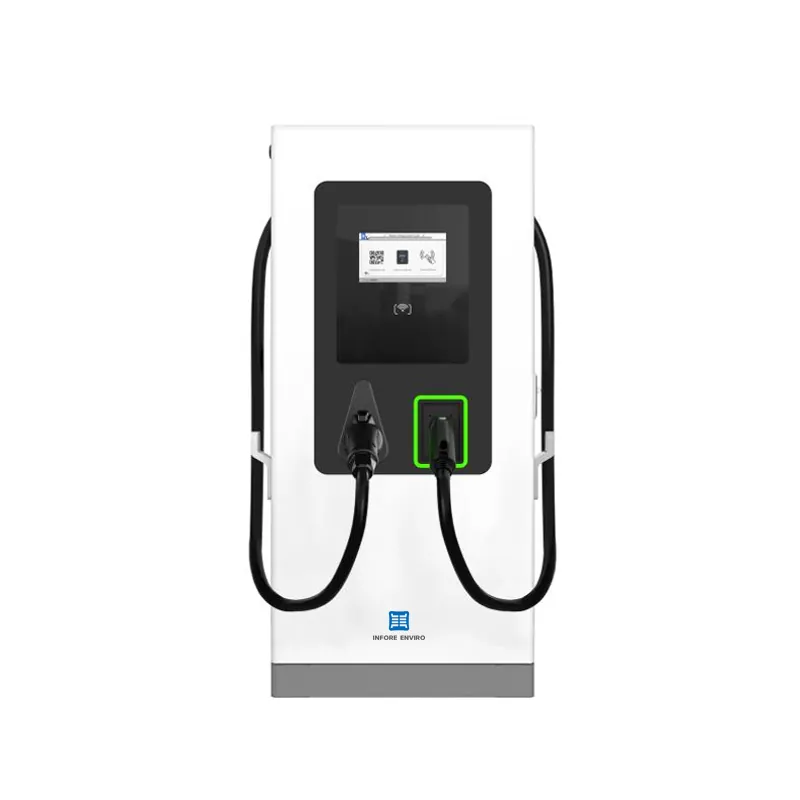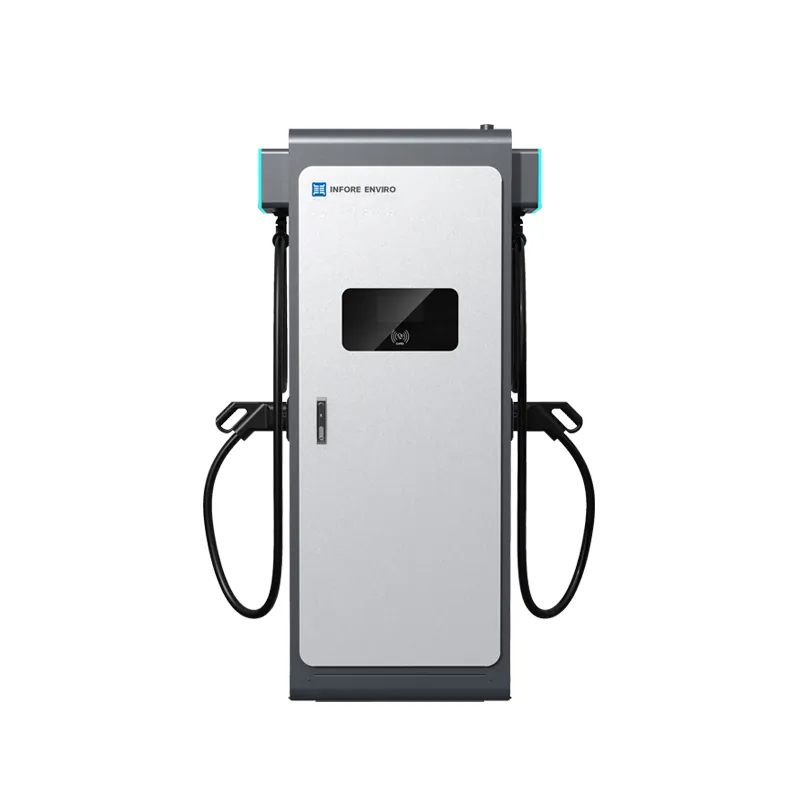
Procurement managers, commercial property owners, and fleet operators face substantial capital expenditure when evaluating high-voltage electric vehicle supply equipment. When determining how much does a dc fast charger cost, buyers frequently encounter confusing quotations that blend heavy civil infrastructure with base equipment pricing. Evaluating true hardware investment requires a granular breakdown of internal electrical architecture, power conversion modules, thermal management systems, and enclosure durability ratings across operational environments.
Direct equipment costs scale with power output, connector configurations, and build materials. Sourcing equipment directly from an established DC fast charger manufacturer provides full visibility into component engineering and manufacturing pricing. Factory-direct procurement eliminates intermediary distribution markups and establishes dependable budget benchmarks for large-scale deployments across commercial parking facilities, fleet depots, and highway transit corridors.

Power Tier Pricing for a Level 3 DC Fast Charger
The primary cost determinant for direct current hardware is total rated output. A Level 3 DC fast charger converts three-phase AC grid electricity into direct current internally. This conversion requires banks of industrial silicon carbide or insulated-gate bipolar transistor rectifier modules. These internal power conversion components represent the single largest fraction of total manufacturing costs for any commercial DC cabinet.
Lower-capacity DC units offer an economical entry point for commercial retail sites with moderate dwell times. Hardware configurations spanning compact 30 kW, 40 kW, and 44 kW options keep internal component counts manageable. These units deliver rapid battery replenishment compared to standard AC chargers without requiring complex liquid cooling loops, keeping initial capital procurement expenses accessible for facility operators.
Mid-range and ultra-fast charging stations require scaled electrical architectures and reinforced cabinets. Power ratings spanning 60 kW, 120 kW, 160 kW, 180 kW, 240 kW, 360 kW, and 480 kW demand high-capacity power module stacking and heavy copper busbars. Units rated above 160 kW often require advanced liquid-cooled cable assemblies to dissipate high amperage heat safely, increasing total equipment procurement expenses.
Dual-connector configurations maximize return on capital for multi-vehicle commercial installations. Specifying our dual-gun 160 kW DC fast charger allows simultaneous dynamic power sharing across two adjacent parking spaces. Alternatively, integrated hybrid stations combining DC 60 kW rapid charging with an auxiliary AC 22 kW socket offer versatile multi-tier charging from a single physical cabinet, reducing overall hardware expenditure per parking bay.
Ingress Protection and Physical Durability Costs
Environmental engineering directly impacts the bill of materials for outdoor commercial charging equipment. Hardware deployed in open commercial lots, highway rest stops, or humid coastal depots requires sealed enclosures to prevent premature electronics degradation. Certified Ingress Protection ratings ensure delicate high-voltage electronics remain fully shielded against severe weather, ambient dust, airborne particulate matter, and driving rain across seasons.
According to our factory engineering specifications, specific models carry distinct ingress ratings tailored for operational scenarios. High-capacity units, including the 2-guns 160kW CCS2 DC station and the integrated DC60kW/AC22kW system, feature an IP54 rating. This verified ingress level guards internal components against dust accumulation and multi-directional water spray, preventing expensive component burnouts in exposed commercial parking lots and outdoor fleet depots.
Similarly, our dual-gun AC units ranging from 14 kW to 42 kW carry an IP54 rating, while standalone 11 kW socket wallboxes achieve IP55 protection. For extreme outdoor exposure, self-developed 7 kW tethered AC wallboxes feature an IP65 sealed enclosure. Selecting the correct ingress rating prevents premature equipment failure, eliminating unplanned maintenance dispatch costs and protecting long-term project profitability.
Compliance Standards and Management Architecture
Internal electrical safety mechanisms represent a substantial portion of hardware development value. Commercial cabinets incorporate comprehensive electrical protection systems, including over-current, over-voltage, under-voltage, short-circuit, ground fault, and emergency stop circuitry. These integrated safety barriers protect connected vehicle battery packs and isolate facility electrical infrastructure from catastrophic power surges during high-draw direct current charging sessions.
International deployment requires strict adherence to regional safety standards and physical connector types. Commercial hardware must incorporate EU Type 2 and CCS2 connectors to serve modern European electric vehicle models. Hardware must also carry comprehensive CE, CB, and RoHS certifications, verifying rigorous electromagnetic compatibility, insulation resistance, and hazardous material compliance before connection to commercial utility grids.
Deployments across Asian markets demand specialized regulatory alignment. Hardware intended for these regions must comply with China GB/T standards and secure mandatory CCC (3C) certifications. Our hardware holds legitimate third-party certifications eliminates legal liabilities, streamlines municipal permit approvals, and avoids project commissioning delays caused by uncertified or substandard electrical equipment during commercial site inspections.
Software interoperability directly protects your long-term capital investment from technology obsolescence. Commercial DC hardware natively supports the Open Charge Point Protocol to communicate with cloud management software. Native OCPP compatibility allows charge-point operators to switch central billing platforms, monitoring software, or payment gateways seamlessly without replacing the underlying physical charging hardware deployed across parking bays in the field.
OCPP integration also unlocks automated dynamic load balancing across multiple connected charging stations. Facility managers can program dynamic current thresholds, preventing costly utility peak-demand surcharges during high-traffic operational hours. Standardized communication protocols allow distributors to integrate charging hardware smoothly into existing building energy management platforms, commercial power distribution systems, and industrial microgrids without technical friction.
Spec Sheet Checklist for Distributors
When evaluating supplier quotations, procurement teams must look beyond initial unit pricing to assess total manufacturing capability and supply chain reliability. Partnering with a dedicated OEM/ODM manufacturer ensures consistent assembly quality across high-volume production runs. Direct factory relationships also facilitate custom enclosure branding, specialized user interface screens, custom connector cable lengths, and custom development tailored to local site requirements.
Manufacturing scale dictates delivery schedules and project installation certainty. Operating our 12,000 square meter factory floor, we maintains predictable lead times of 30 to 45 days. This production capacity enables distributors, project contractors, and fleet operators to commit to tight deployment deadlines without fear of supply chain disruptions, component shortages, or extended overseas shipping delays.
For a decade, INFORE ENVIRO has focused on engineering durable electric vehicle supply equipment. With 10 years in EVSE manufacturing, our self-developed, in-house production covers AC wallboxes from 7 kW to 22 kW and DC fast chargers spanning 30 kW to 480 kW. This integrated manufacturing approach guarantees complete quality control over sub-assemblies, cabinet fabrication, and firmware stability.
Commercial warranty terms provide an essential financial safety net for property operators. Project managers should mandate a standard 2-year warranty on all commercial charging hardware to mitigate component defect risks. Furthermore, our dedicated 7×24 hour after-sales technical response team ensures field issues receive immediate support, keeping commercial charging bays fully functional and maximizing ongoing operational revenue across the installation lifecycle.