Electrical contractors, residential property developers, and multi-family facility integrators frequently encounter capacity doubts from property owners during site assessments. When clients ask whether a specific property can handle level 2 charging hardware, electrical engineers must evaluate breaker panel headroom, incoming service amperage, and continuous electrical load margins. Recommending the wrong equipment without a load calculation leads to tripped breakers and costly service upgrade disputes.
To ensure safety and performance, procurement managers must evaluate hardware specifications against residential electrical parameters. Sourcing an industrial-grade EV Level 2 charger guarantees reliable overnight power transfer without exceeding residential main panel capacity. A proper equipment selection balances charging speed, local electrical code compliance, and available circuit breaker ratings across single-family homes and multi-unit residential communities.
Evaluating Panel Capacity and AC Power Configurations
Assessing whether a residential panel can support alternating current infrastructure begins by calculating the continuous current draw. Standard electrical codes mandate that continuous loads must not exceed 80 percent of a circuit breaker’s nominal rating. For instance, delivering a steady 32-amp charging current requires a dedicated 40-amp double-pole breaker connected directly to the primary distribution panel.
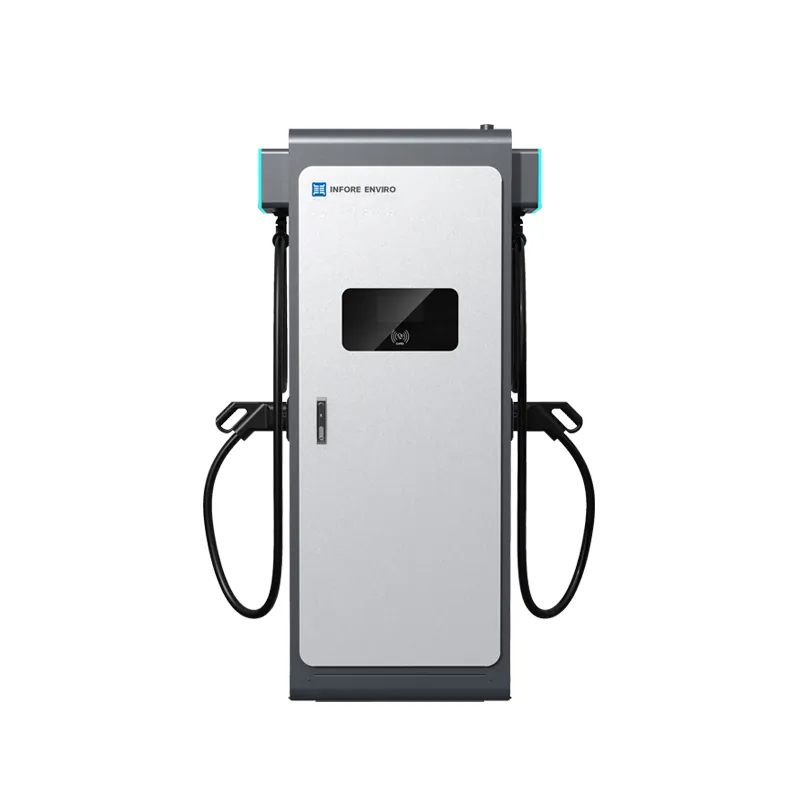
Alternating current hardware provides flexible output options to match various residential transformer limits. Our available AC power tiers include single-phase 7 kW (32A at 230V), three-phase 11 kW (16A per phase), and high-capacity 22 kW (32A per phase) configurations. Deploying 7 kW or 11 kW wallboxes provides adequate overnight replenishment for daily commuting without requiring expensive incoming service panel replacements from local electric utilities.
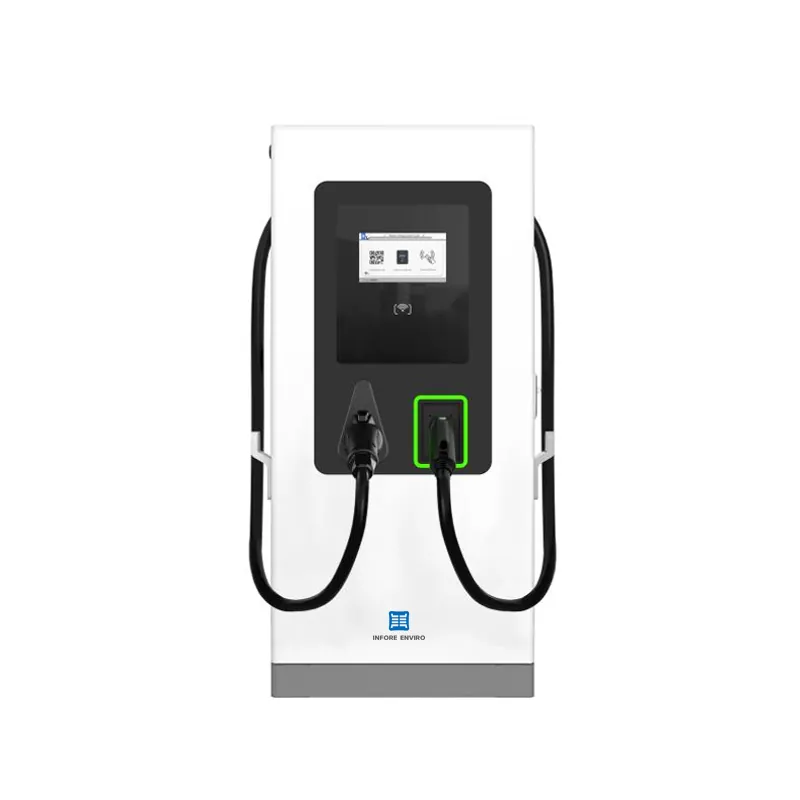
In contrast, high-draw commercial sites and fleet maintenance facilities operate heavy-duty direct current infrastructure. Our direct current power options span from compact 30 kW, 40 kW, and 44 kW modules up to heavy 60 kW, 120 kW, 160 kW, 180 kW, 240 kW, 360 kW, and 480 kW stations. For standard residential and light multi-family settings, AC wallbox architectures remain the standard technical choice.
Ingress Ratings and Physical Enclosure Sealing
Outdoor carports, open residential driveways, and underground parking bays present distinct environmental challenges for charging equipment. Water intrusion or conductive dust accumulation inside an unsealed cabinet can trigger ground-fault errors and destroy sensitive control boards. Procurement engineers must verify certified Ingress Protection (IP) ratings on manufacturer spec sheets to guarantee long-term operational resilience in exposed outdoor environments.
Factory engineering data outlines specific ingress grades across different AC hardware designs. A self-developed 7 kW tethered wallbox features a robust IP65 sealed enclosure, providing complete protection against airborne dust and multi-directional water jets. This makes 7 kW units ideal for unsheltered outdoor installations facing heavy seasonal rainfall.
For semi-enclosed parking structures and residential carports, our standalone 11 kW socket wallboxes achieve a certified IP55 rating. Our dual-port AC stations ranging from 14 kW to 42 kW carry an IP54 rating, balancing ventilation requirements with splash and dust resistance. Specifying the best EV Level 2 charger with the proper IP rating eliminates premature field service calls and keeps residential charging points operational year-round.
Internal electrical protections provide essential safety barriers for residential distribution systems. Commercial-grade wallboxes feature integrated safeguards against over-voltage, under-voltage, short circuits, ground faults, and residual direct current leakage. These comprehensive protective circuits isolate the home’s electrical panel from high-voltage surges, protecting the vehicle’s onboard charger and preventing household electrical disruptions during high-current charging sessions.
Smart Protocol Interoperability and Regulatory Compliance
Residential multi-family developments and shared community parking lots require centralized hardware communication. Sourcing wallboxes that natively support the Open Charge Point Protocol (OCPP) allows property managers to monitor energy consumption, assign individual tenant billing, and configure scheduled off-peak charging. OCPP compatibility ensures hardware works seamlessly with third-party software platforms without vendor lock-in.
OCPP firmware also enables automated dynamic load balancing across multiple connected residential bays. When household appliances increase overall building energy consumption, the charging station throttles power delivery to stay below main breaker limits. This dynamic throttling allows housing complexes to install multiple charging points without triggering expensive electrical service upgrades from municipal power companies.
Regional regulatory compliance confirms that equipment meets international electrical safety directives. Our hardware engineered for European and international distribution must provide EU Type 2 connector compatibility alongside CE, CB, and RoHS certifications. These credentials verify compliance with electromagnetic compatibility standards and hazardous material restrictions, streamlining electrical permitting for installation contractors.
For Asian regional markets, our hardware complies with China GB/T standards and carries mandatory CCC (3C) certifications. Independent laboratory verification of these technical standards gives project contractors confidence that the equipment satisfies municipal electrical codes and passes building inspection requirements during handover.
Spec Sheet Checklist for Distributors
Evaluating EVSE manufacturing partners requires examining factory production scale and custom development capabilities. Partnering with an established OEM/ODM supplier enables distributors to request tailored enclosure branding, specific cable lengths, and custom firmware configurations. Sourcing directly from an experienced manufacturer ensures component traceability and consistent assembly quality across high-volume orders.
Manufacturing footprint directly impacts delivery schedules and project timelines. Operating our 12,000 square meter factory floor, an experienced production partner maintains predictable delivery windows of 30 to 45 days. This manufacturing scale allows distributors and electrical contractors to commit to tight residential construction schedules without facing unpredictable supply chain bottlenecks or shipping delays.
With 10 years in EVSE manufacturing, INFORE ENVIRO engineers self-developed AC wallboxes from 7 kW to 22 kW alongside high-voltage DC systems. Our in-house production model ensures strict control over circuit board assembly, cabinet fabrication, and firmware development for commercial and residential applications.
Contractual safety nets protect long-term equipment investment for property developers. Sourcing contracts should always include a standard 2-year warranty to safeguard against component defects. Backed by our dedicated 7×24 hour after-sales technical response team, project integrators receive immediate support for troubleshooting and firmware diagnostics, ensuring maximum station uptime and dependable daily charging performance.