Logistics directors face an absolute operational limit when electrifying regional transit routes: vehicle dwell time. Relying on shared public networks introduces unpredictable queuing delays that instantly destroy strict dispatch schedules. To maintain profitable turnaround metrics, logistics hubs must internalize their energy infrastructure.
Deploying private fleet EV charging stations guarantees immediate power access the exact moment a commercial delivery van returns to the central depot. Procurement engineers must specify hardware that matches the precise battery chemistry and daily route mileage of their rolling stock. Installing industrial-grade equipment on-site permanently eliminates third-party network dependencies.

Matching Heavy-Duty Power to Dispatch Schedules
To keep commercial vans moving, procurement teams must look far beyond standard destination wallboxes. Alternating current hardware works efficiently for overnight parking, offering 7 kW, 11 kW, and 22 kW capacities. However, rapid-response logistics require massive energy transfer in extremely tight daytime windows to keep the fleet moving continuously.
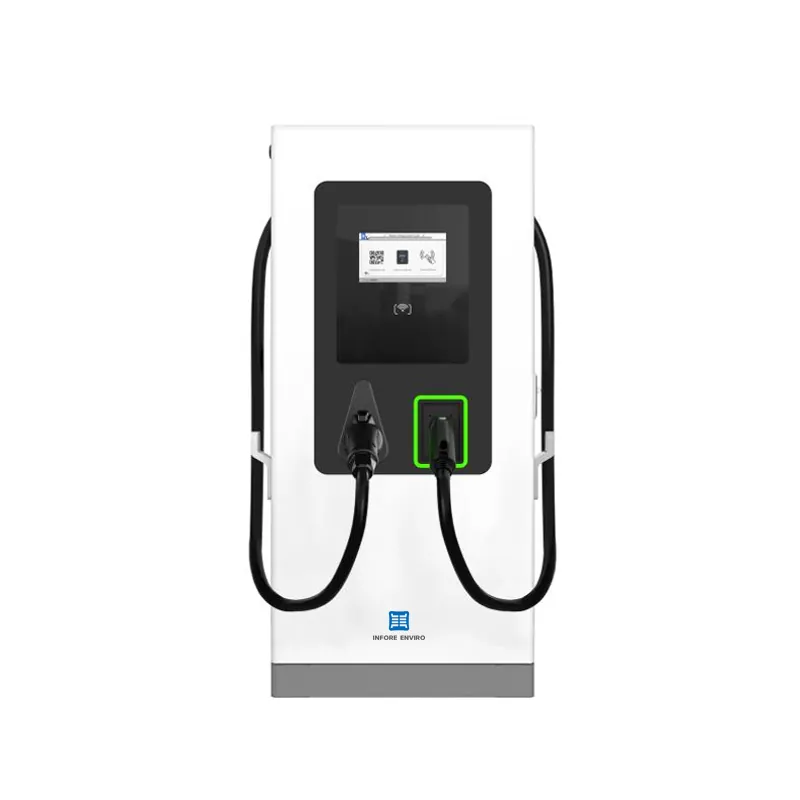
Integrating a certified CCS DC fast charger directly addresses this daytime charging deficit. Direct current systems bypass the vehicle’s internal converter entirely to pump high voltage straight into the heavy-duty battery pack. Facility engineers can specify modular direct current cabinets ranging from compact 30 kW, 40 kW, and 44 kW options for lighter utility vans.
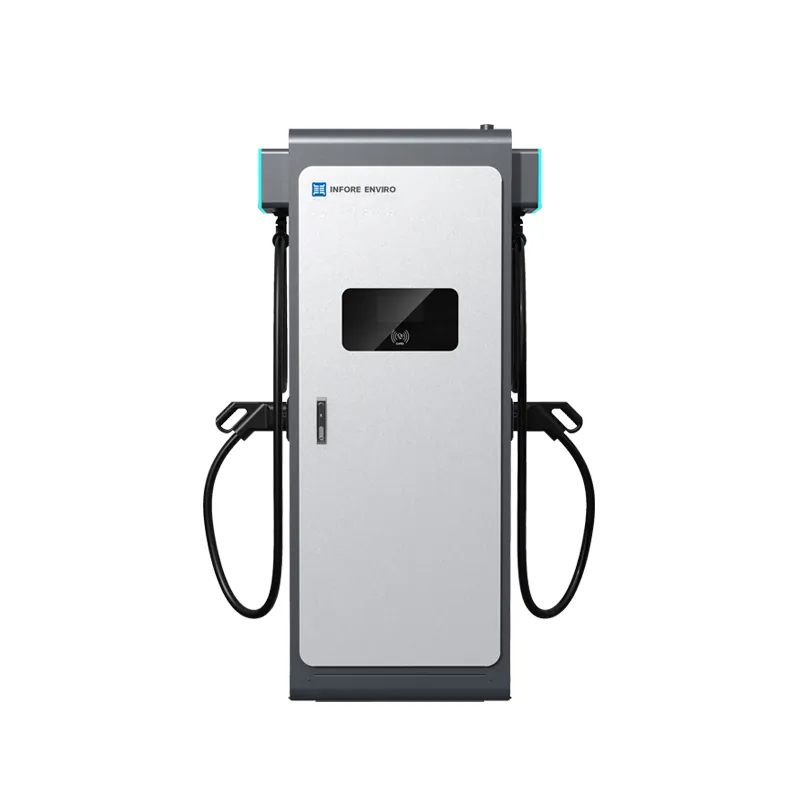
For heavy freight logistics and continuous municipal transit operations, equipment must scale aggressively to meet demand. Procurement managers can seamlessly source ultra-fast architectures outputting 60 kW, 120 kW, 160 kW, 180 kW, 240 kW, 360 kW, and up to 480 kW. This broad power spectrum ensures depot operators align hardware expenditure precisely with their expected vehicle turnaround metrics.
Environmental Ruggedization for Transit Depots
Commercial transit depots expose electrical infrastructure to severe mechanical and environmental stress daily. Units located near wash bays, active loading docks, or open coastal lots face constant moisture and airborne conductive dust. Specifying appropriate Ingress Protection is a critical engineering requirement to actively prevent high-voltage shorts and localized electrical fires.
Based directly on the reference file image_6aaca5.png, procurement teams must rigorously match IP ratings to specific depot zones. Our heavy-duty 2-guns 160kW DC EV charging station featuring CCS2 connectors carries an IP54 rating. This rating strictly safeguards internal power rectifiers against dust accumulation and multi-directional water spray in standard outdoor yards.
Hybrid configurations offer similar environmental ruggedness for mixed-use logistics centers. Our DC60kW/AC22kW integrated station also features a highly durable IP54 enclosure. For auxiliary AC installations, our 14-42kW 2-guns Type 2 model meets strict IP54 standards, while standalone 11kW socket units provide robust IP55 protection against finer dust particles.
Extreme outdoor environments demand specialized engineering. Our self-developed AC 7kW tethered wallbox features total IP65 sealing. Utilizing appropriately rated commercial enclosures ensures charging bays remain highly operational through heavy seasonal rainstorms and harsh winters, virtually eliminating unexpected maintenance dispatch requests from the depot facility manager.
Protocol Integration and Depot Electrical Safety
Hardware specifications represent only one critical layer of total fleet optimization. Telematics and energy management software must communicate securely with the physical chargers. Industrial units must natively support the Open Charge Point Protocol to sync smoothly with centralized depot dispatch systems, entirely avoiding proprietary vendor software lock-in over the equipment lifespan.
Native OCPP interoperability enables facility directors to implement automated dynamic load balancing across the entire yard. When multiple delivery trucks plug in simultaneously, the software intelligently caps the total electrical draw. This prevents the depot from exceeding its municipal transformer capacity and eliminates severe peak-demand utility penalties from local power providers.
Electrical safety mechanisms actively isolate depot utility grids from catastrophic failure. High-end commercial cabinets integrate over-voltage, under-voltage, short-circuit, and ground fault protections. These redundant safety barriers aggressively protect expensive commercial vehicle batteries during high-amperage transfer, ensuring depot personnel remain safe while handling heavy equipment in wet outdoor conditions.
International route operators must enforce strict regional regulatory compliance. European commercial deployments require EU Type 2 and CCS2 inlets, fully supported by CE, CB, and RoHS environmental certifications. For Asian logistics hubs, hardware must satisfy China GB/T standards and hold mandatory CCC (3C) testing credentials to pass strict municipal electrical inspections.
Spec Sheet Validation for Fleet Integrators
Executing a depot-wide electrical upgrade requires an OEM/ODM partner with massive manufacturing reserves. Relying on an established manufacturer ensures strict component consistency across massive bulk orders. Factory-direct sourcing enables project integrators to specify exact cable lengths, custom interface branding, and tailored connector combinations to match their specific rolling stock .
Total production capacity directly impacts commercial rollout schedules. Operating our massive 12,000 square meter facility, we maintain highly predictable lead times spanning 30 to 45 days. This rapid fabrication capability allows regional transit operators to sequence their civil engineering and vehicle delivery schedules with absolute certainty, bypassing third-party broker delays.
Financial risk mitigation remains a core operational procurement duty. Fleet managers should strongly mandate a 2-year warranty on all installed hardware to cover premature component degradation. Moreover, guaranteed access to our dedicated 7×24 hour after-sales response team ensures unexpected field anomalies receive immediate engineering support, keeping logistics vehicles fully charged.
With a decade of specialized commercial engineering, INFORE ENVIRO supplies resilient infrastructure for high-demand transit applications. Our 10 years in EVSE manufacturing ensures every self-developed cabinet delivers continuous power under harsh physical conditions. Our direct in-house production guarantees fleet operators receive reliable, customized hardware that permanently stabilizes their daily logistical dispatch operations.