Urban charging projects face limits that are very different from private parking or enclosed commercial sites. Roadside space is tight, power access may be restricted, and charging equipment must operate beside traffic and pedestrians. For planners, the main task is not simply adding chargers. It is matching charging capacity, parking behavior, electrical supply, and public-space design so the site can work reliably without creating new access problems.
Street charging also has to fit the pace of urban travel. Some vehicles remain parked for hours, while others need a shorter charging stop. This difference affects charger type, power allocation, bay design, and expected turnover. A practical project therefore starts with local traffic patterns and existing infrastructure before equipment is selected.
Power Capacity Is Often the First Constraint
Existing urban distribution networks were not designed around large clusters of EV chargers. Before installation, project teams should review available capacity, transformer loading, cable routes, and possible upgrade work. The required charging power should be compared with actual parking demand rather than selected in isolation.
Load planning can also reduce pressure on the local supply. Sites with several charging points may need power sharing or scheduled output. This is especially useful where the grid connection cannot support all chargers operating at full rated power at the same time.
At INFORE ENVIRO, we develop charging products for different power levels and site conditions. Our technical team includes more than 100 personnel, supported by more than 20 testing staff. We invest about 25% in research and development and hold more than 30 patents, which supports product development for commercial charging projects.
Roadside Space Changes Charger Layout
Curbside charging leaves less room for equipment, vehicle movement, and maintenance access. Charger position should avoid blocking pedestrian routes, doors, drainage points, and traffic visibility. Cable reach also matters because a poorly positioned unit may force users to stretch cables across walking areas.
An AC DC charger can be useful where one site must serve vehicles with different dwell times. AC charging can support longer parking, while DC charging can serve drivers who need a shorter stop. The value comes from matching charging behavior to the available curb space rather than using one power level for every bay.
Parking control is another part of the design. If fully charged vehicles remain in place for long periods, charger availability falls even when the electrical system is sufficient. Clear bay rules and suitable operating policies can help charging capacity match real urban demand.
Outdoor Protection and Daily Operation Matter
Street chargers remain exposed to dust, rain, humidity, repeated connector use, and accidental contact. Enclosure protection should therefore be reviewed together with drainage, mounting height, cable routing, and surrounding street conditions. Routine inspection is still required even when a charger has an outdoor protection rating.
Urban projects also need practical maintenance access. Technicians should be able to inspect connectors, screens, ventilation areas, and internal service points without blocking nearby traffic for long periods. Standardized equipment layouts can make this easier across multiple roadside locations.
For operators, remote monitoring can reduce unnecessary site visits. Charging status, fault information, and session records can help maintenance teams identify which location needs attention before a technician is dispatched.
Mixed Charging Can Fit Different Urban Users
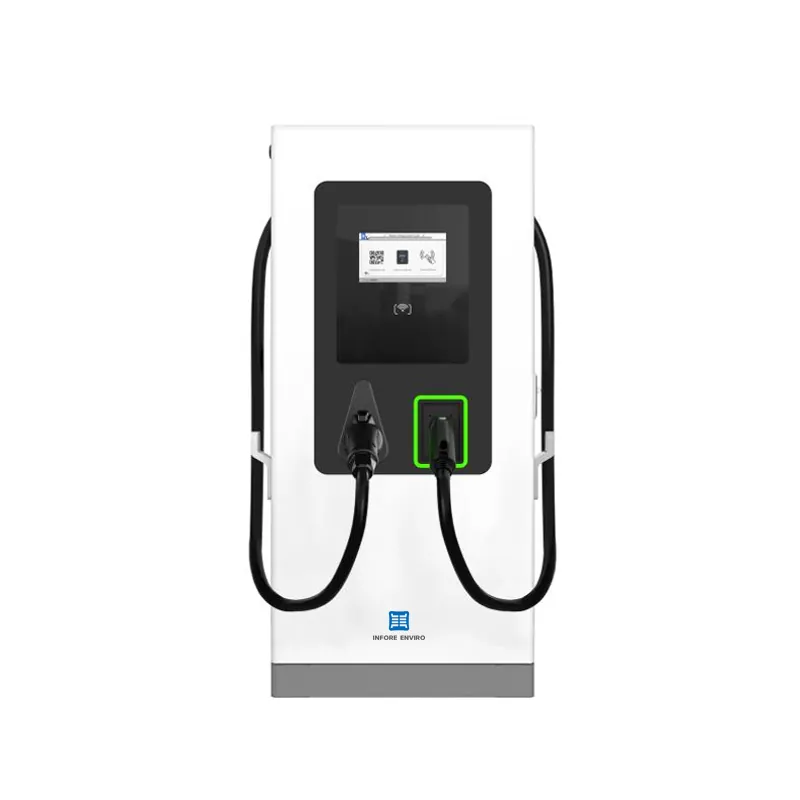
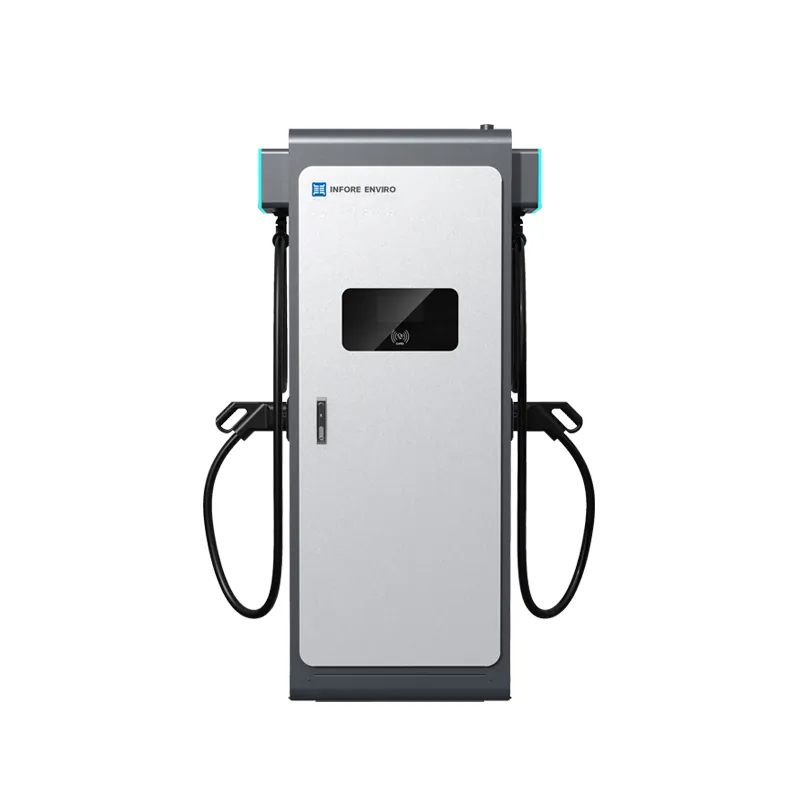
One product example is our DC60kW+AC22kW Vector Series DC Fast Charger. It combines 60kW DC output with 22kW AC output in one floor-standing unit and supports dual-gun operation for mixed charging needs.
The DC side supports CCS2 or CCS1, while the AC side uses Type2. The listed current ratings are 200A for CCS2 and 32A for AC. The unit also includes a 10.1-inch touchscreen and an IP54 enclosure.
This AC DC charger can be used for commercial workplaces, retail locations, hospitality sites, destination charging, and roadside projects. For on street EV charging, the combined configuration can help planners serve different parking durations without installing separate cabinets for each charging type.
Urban Charging Needs More Than Hardware
Roadside charging projects also depend on communication, payment arrangements, parking management, and maintenance procedures. These elements influence whether the charger remains useful after installation. Equipment selection should therefore be linked to the operating model from the start.
Project buyers should also compare delivery capability, service arrangements, and long-term maintenance needs. We provide a two-year warranty, 7×24-hour after-sales response, and standard OCPP protocol support. Our 12,000-square-meter factory supports in-house production, with a stated delivery cycle of 30 to 45 days for relevant projects.
INFORE ENVIRO has ten years of industry experience, but experience alone does not decide project suitability. We still need to match charger configuration with the local grid, traffic flow, parking duration, connector requirements, and site environment before a roadside deployment plan is finalized.
A Practical Path for Urban Deployment
Cities can reduce roadside charging problems by treating the project as part of the wider streetscape and power network. Grid capacity, equipment footprint, user dwell time, cable safety, weather exposure, and maintenance access should be reviewed together before installation begins.
Practical urban charging plans start with real site conditions. When charger power and layout follow local parking behavior and electrical limits, operators can use available space more effectively while giving drivers a more predictable charging experience.