Municipal planners and charge-point operators face immense logistical hurdles when deploying electrical infrastructure along public curbsides. Unlike secured commercial transit depots or private garages, curbside equipment remains exposed to pedestrian traffic, severe weather, and potential physical vandalism around the clock. Relying on lightweight consumer-grade hardware in these highly vulnerable zones inevitably results in shattered interface screens, severed connector cables, and continuous ground-fault failures.
To maintain profitable municipal networks, procurement engineers must mandate industrial-grade physical security and rigorous digital access protocols. A successful on street EV charging deployment directly demands hardware specifically engineered for hostile public environments. Network operators need heavy-duty enclosures that physically protect internal high-voltage electronics. Simultaneously, they must utilize advanced software protocols to verify user identity securely before initiating any power transfer on public sidewalks.
Defending Against Environmental and Physical Threats
Public curbside infrastructure demands uncompromising environmental ruggedization from the factory level. Equipment placed directly along busy public roads faces constant bombardment from passing tire spray, corrosive winter road salt, and windblown particulate matter. Procurement teams must scrutinize Ingress Protection ratings heavily during the bidding phase. Insufficiently sealed cabinets rapidly accumulate internal moisture, aggressively destroying sensitive power electronics and forcing expensive emergency maintenance dispatches.
Factory engineering data dictates specific protection grades for various public deployment scenarios. The self-developed AC 7 kW tethered wallbox utilizes a highly robust IP65 enclosure. This stringent rating guarantees complete defense against fine dust ingress and low-pressure water jets, making it ideal for exposed curbside installations. For less exposed municipal transit shelters, standalone 11 kW socket models provide strict IP55 particulate resistance.
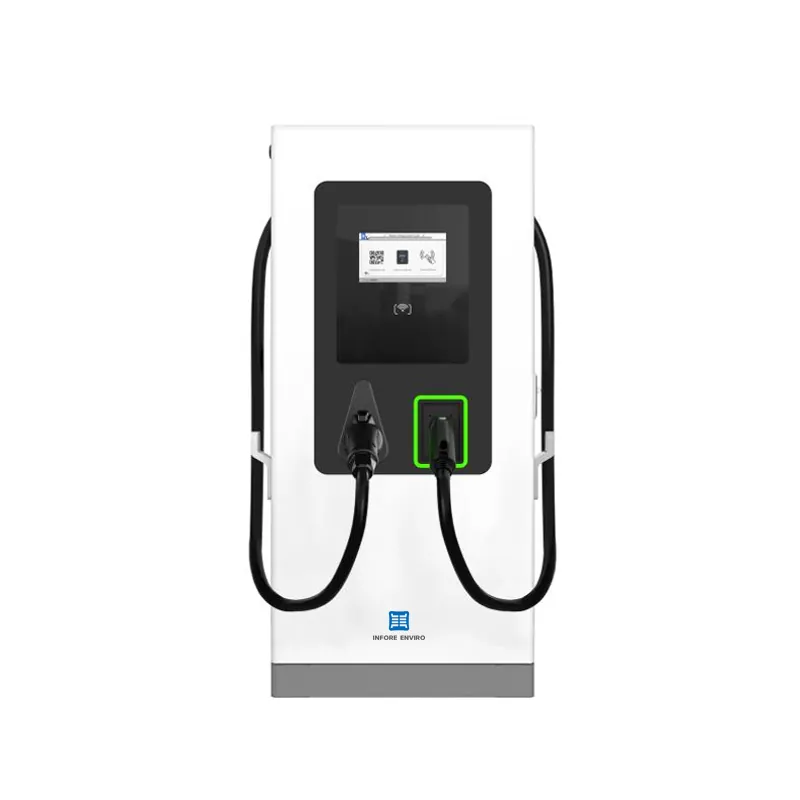
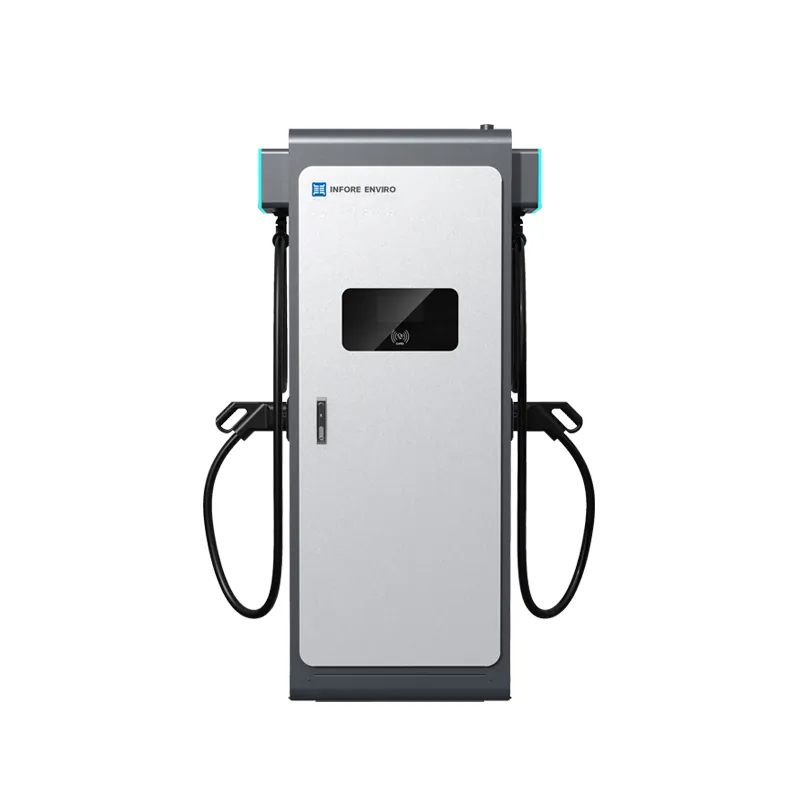
Higher capacity municipal hubs demand equally resilient enclosures to survive street-level exposure. Our heavy-duty 2-guns 160kW DC fast station features a certified IP54 waterproof and dustproof rating, easily surviving multi-directional splashing from heavy street traffic. Deploying properly rated equipment physically secures the capital investment against weather-related destruction. This proactive engineering keeps public charging points continuously operational regardless of severe local seasonal climate conditions.
Hybrid Power Configurations and Secure Authentication
Municipal parking dwell times vary wildly across different city zoning districts. Residential curbsides typically require 7 kW, 11 kW, or 22 kW alternating current hardware to safely accommodate overnight street parking limits. Conversely, high-traffic downtown commercial corridors require rapid-charging direct current solutions. Procurement teams can scale our compact 30 kW, 40 kW, and 44 kW modules up to massive 120 kW, 160 kW, and 240 kW systems.
To maximize limited physical space on crowded urban sidewalks, city planners frequently deploy hybrid equipment. Specifying our integrated AC DC charger allows municipal operators to service diverse vehicle architectures from one single physical footprint. Combining a DC 60kW rapid output directly with an AC 22kW socket heavily minimizes municipal trenching costs. This multi-tier approach effectively prevents sidewalk clutter while securely serving transient drivers.
Physical durability must pair directly with strict software-level security architectures. Our public hardware must natively support the Open Charge Point Protocol to communicate securely with central municipal billing networks. Native OCPP integration allows operators to mandate RFID card authentication or encrypted mobile application handshakes before unlocking the physical charging socket. This digital security prevents unauthorized power theft across unmonitored curbside locations overnight.
Furthermore, OCPP integration enables automated dynamic load balancing across entire city blocks. When multiple vehicles connect simultaneously along a single street, the central software intelligently throttles power delivery to stay safely below the municipal transformer’s limit. This active load management allows city planners to expand curbside infrastructure aggressively without triggering catastrophic grid overloads or demanding expensive utility substation upgrades from local power distributors.
Internal Electrical Safeguards and Global Compliance
Beyond external vandalism, unmonitored public infrastructure must defend aggressively against local grid instability. Commercial cabinets incorporate comprehensive internal electrical protections by default. These mandatory safeguards instantly shield against over-voltage, under-voltage, short circuits, ground faults, and unexpected direct current leakage. Redundant safety circuits instantly isolate the high-voltage flow if a pedestrian tampers with the connector, protecting the general public from severe electrical hazards.
Global curbside deployments definitively require full adherence to regional safety standardizations. Our hardware bound for European municipalities must comprehensively support EU Type 2 and CCS2 connector formats. Furthermore, our public equipment must carry legitimate CE, CB, and RoHS certifications. These critical credentials verify that the infrastructure meets stringent electromagnetic compatibility requirements, ensuring the high-voltage chargers do not interfere with nearby traffic lights or telecommunications.
Domestic installations within specific Asian markets mandate distinct localized regulatory alignment. Public street hardware destined for these regions must fully support China GB/T standards and secure mandatory CCC (3C) testing certifications. Providing equipment backed by verified third-party laboratory testing eliminates municipal liability risks. This regulatory compliance guarantees that project contractors pass rigorous city electrical inspections without encountering bureaucratic commissioning delays.
Spec Sheet Verification for Municipal Contractors
Executing a massive city-wide infrastructure rollout requires an OEM/ODM partner possessing substantial manufacturing reserves. Sourcing directly from an established production facility ensures exact component consistency across massive municipal orders. Factory-direct partnerships uniquely enable project integrators to request custom cabinet branding, specific anti-vandalism screen interfaces, and tailored connector combinations that match exact city planning aesthetics and localized fleet requirements.
Raw production capacity directly dictates the reliability of public infrastructure deployment schedules. Operating our expansive 12,000 square meter factory floor, we guarantee highly predictable delivery cycles spanning 30 to 45 days. This rapid fabrication volume empowers regional distributors to sequence their civil engineering and utility trenching schedules with absolute certainty, aggressively avoiding costly labor delays during the complex public construction phase.
Financial risk mitigation remains an essential operational duty for municipal procurement teams. City supply contracts must formally mandate a standard 2-year warranty to robustly cover unexpected premature component degradation. Furthermore, guaranteed access to our dedicated 7×24 hour after-sales technical response team ensures field anomalies receive immediate engineering support. This round-the-clock backing keeps street bays operational and actively prevents citizen complaints regarding broken infrastructure.
For a decade, INFORE ENVIRO has rigorously engineered resilient electrical infrastructure for highly demanding public environments. Leveraging 10 years in EVSE manufacturing, our in-house production directly supplies industrial-grade hardware fully capable of surviving harsh curbside conditions. Self-developed manufacturing ensures detailed quality control over every modular component, providing city planners with highly dependable hardware for long-term, secure public deployment across urban grids.