Choosing a home EV charger involves more than checking its rated power. Buyers also need to consider the vehicle connector, household electrical capacity, charging habits, installation conditions, and future use. For European-market vehicles, connector compatibility is especially important. The right charger should match both the car and the electrical environment instead of being selected from one specification alone.
Start With the Vehicle Connector
The first step is to confirm the charging interface used by the vehicle. Connector compatibility determines whether charging equipment can connect correctly without additional adapters or modifications. This matters for distributors, installers, property developers, and other B2B buyers who may support several vehicle models within one residential project.
Type 2 is commonly associated with AC charging in European applications. However, connector requirements can vary between markets and vehicle models. Project teams should check the vehicle inlet, local charging standard, and intended installation region before placing an order.
For procurement teams searching for the best home EV charger, compatibility should come before appearance or additional smart functions. The connector type, electrical rating, and charging mode need to match the vehicle first. Smart features can then be considered according to the project’s actual management requirements.
Match Charger Power to the Site
Power affects charging speed, electrical load, and installation requirements. Residential AC charging may use single-phase or three-phase electrical supplies depending on the building and local grid conditions. Installers should review available circuit capacity and the vehicle’s onboard AC charging limit before deciding on charger power.
Higher charger power does not automatically mean the vehicle will charge faster. The onboard charger inside the vehicle can limit AC input. If the vehicle accepts a lower AC rate, installing equipment with a higher rating may not produce the expected charging time reduction.
Cable sizing, breaker selection, and upstream electrical capacity should also match the charger. These checks are particularly useful when several residential chargers share the same distribution system. Load demand needs to be understood before equipment is installed.
At INFORE ENVIRO, we develop charging equipment for different project requirements and support customized development. Our technical team includes more than 100 personnel, while more than 20 staff are involved in testing. Our company invests 25% in R&D and holds more than 30 patents.
Protection Depends on the Installation Environment
Residential charging equipment can be installed in garages, carports, private parking areas, or semi-outdoor locations. Environmental conditions therefore need to be reviewed before selecting an enclosure. Dust, rain exposure, cable routing, mounting position, and access for inspection can affect long-term use.
Protection functions should be considered together with the electrical installation. Grounding arrangements, upstream protective devices, and suitable wiring are important parts of the complete charging system. Charger protection alone cannot replace correct site design and installation practices.
Cable reach is another practical detail. The charging cable should reach the vehicle inlet without excessive pulling or twisting. Parking position should therefore be checked before the wallbox location is fixed. This can also reduce unnecessary cable movement during repeated daily charging.
Decide Which Smart Features Are Necessary
Smart functions can make charging easier to manage, but not every project requires the same features. App functions may support charging control or status checking. Communication capabilities can also help B2B customers connect chargers with external management systems.
OCPP is relevant when project operators need standardized communication between chargers and a management platform. It can support broader equipment management requirements without restricting the project to basic standalone charging.
Dynamic load balancing can also be useful where electrical capacity is limited. The function can coordinate charger demand with other building loads when configured within a suitable electrical system. Installers should still evaluate the distribution capacity before deciding whether this option is needed.
A Home Wallbox as a Product Reference
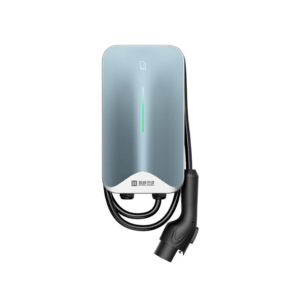
Our Vela Series 7kW Home AC Wallbox is one product that can be considered when evaluating residential charging equipment. The supplied product information also includes a 1-phase 6kW configuration with OCPP 1.6J communication and full protection functions.
Optional dynamic load balancing and an optional smart APP are available according to project requirements. Connector types can also be customized. The product information specifies an IP65 enclosure rating and a three-year warranty, providing useful reference points when comparing wallbox configurations for different projects.
These specifications show why product selection should go beyond charging power. Communication, enclosure protection, connector configuration, and optional load management can all affect whether a charger suits the planned application.
Consider Long-Term B2B Procurement
B2B buyers often purchase charging equipment for more than one installation. Distributors, developers, and installation companies may need consistent configurations, delivery planning, technical documentation, and after-sales support across repeated projects.
Customization becomes more important when products are supplied to several markets. Different regions may require different connectors, communication functions, or configurations. Buyers should discuss these requirements before production instead of making changes after equipment reaches the project site.
We support self-developed production at INFORE ENVIRO, with a factory covering about 12,000 square meters. Our stated delivery cycle is 30 to 45 days. We also provide 7×24-hour after-sales response, which can support distributors and project partners during equipment operation.
Making the Final Selection
Selecting the best home EV charger should begin with the vehicle and then move to the electrical site, installation environment, and management requirements. Buyers should review charging power, connector compatibility, enclosure protection, communication capability, cable position, and optional load management together.
For B2B projects, repeat procurement and configuration flexibility also deserve attention. A suitable type 2 EV home charger needs to fit the vehicle as well as the building and operating conditions. Careful technical matching before ordering can reduce installation changes and make later project management more practical.