Power distribution is a central design issue in a two-connector AC charging setup. When two vehicles charge at the same time, the system must divide available electrical capacity without creating unnecessary stress on the site supply. A well-planned dual port level 2 EV charger system therefore needs clear limits for total power, simultaneous charging, and future expansion.
Charger output should be planned around the real capacity of the building or parking site, not only around the rated power printed on the equipment. This helps operators use available power efficiently.
Start With the Site Power Limit
Power distribution begins with the electrical capacity available at the installation point. Project teams should review transformer capacity, distribution boards, existing building loads, and expected charging demand before setting charger output.
Two charging guns may operate at the same time, but the building may not have enough spare capacity to supply both at maximum output continuously. In this case, the charging system needs a defined total power ceiling.
This ceiling becomes the basis for allocation. The charger or management platform can distribute power between two vehicles according to site rules instead of treating each connector as an isolated load.
Understand Simultaneous Charging Behavior
A dual port EV charger is designed to serve two vehicles from one charging unit. The main planning question is whether both connectors need full rated output at the same time.
In many commercial sites, vehicles arrive at different times and have different battery states. One vehicle may draw more power while another requires less. Dynamic distribution can use this difference to improve utilization of the available supply.
Dwell time also matters. Office parking, residential projects, hotels, and long-stay commercial locations often allow several hours for charging. These sites may not require maximum output on both guns throughout the session.
Fixed Allocation Versus Dynamic Distribution
Fixed allocation divides available capacity into preset limits. Each gun can receive a fixed share when both are active. This method is simple to design and easy to predict.
Dynamic distribution is more flexible. Power can be adjusted according to vehicle demand and the total site limit. When one vehicle finishes charging or reduces its draw, more capacity can be made available to the second connector.
The choice depends on project complexity and operating requirements. Sites with several chargers may benefit more from dynamic allocation because total demand changes throughout the day.
Communication Supports Better Load Control
Power management is not only an electrical hardware issue. Communication also matters. A charger that exchanges operating data with a management platform gives operators more visibility over charging sessions and equipment status.
Standard OCPP support can connect chargers with compatible back-office platforms. Operators can review charging activity and charger status, as well as apply charging rules according to project requirements.
4G, Wi-Fi, Bluetooth, and Ethernet provide different connection paths depending on site conditions. Stable communication supports practical management of multiple charging points.
Applying the Principle to a Commercial Dual-Gun Unit
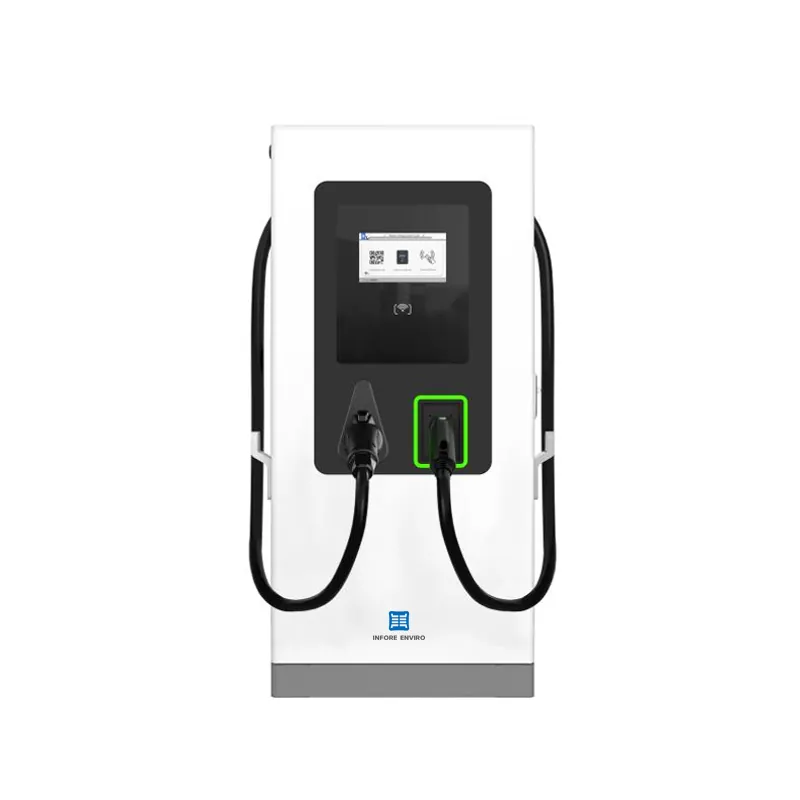
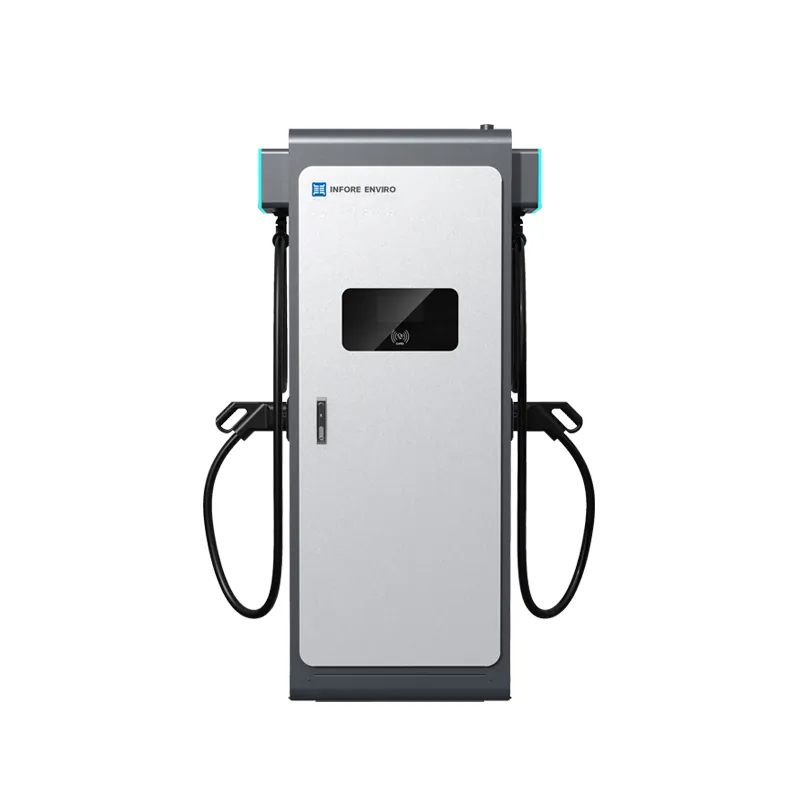
For projects that need two AC charging connectors in one floor-mounted unit, the Carina series provides a practical example. INFORE ENVIRO offers a 14kW to 42kW commercial floor-mounted model with two Type 2 guns and simultaneous charging capability.
The unit uses a 5-inch touchscreen HMI and supports APP and RFID card operation. Communication options include 4G, Wi-Fi, Bluetooth, and Ethernet. It also supports OCPP dual-platform connectivity and carries an IP54 enclosure rating.
In a dual port level 2 EV charger deployment, these functions support charging access and operational management. The two-gun structure can suit commercial and residential projects where several vehicles need shared access to AC charging.
Match Charger Power to Real Demand
Selecting charger output should follow actual usage patterns. Higher rated power does not automatically mean a better project result. If vehicles stay parked for long periods, lower per-port output may still provide enough energy before departure.
Operators should estimate vehicle turnover, parking duration, expected state of charge, and charging sessions. These factors help determine whether 14kW, 22kW, or a higher total power level is more appropriate.
For larger installations, each charger should be included in the total site load calculation rather than treated as an independent device.
Leave Capacity for Growth and Other Loads
Charging demand may increase after a project begins operating. New vehicles or additional chargers can change the original load profile. Electrical planning should leave reasonable room for expansion where site conditions allow.
Other building loads also change during the day. HVAC systems, lighting, elevators, and production equipment may affect how much capacity remains available for charging.
Our company develops charging products with self-developed and self-produced capabilities. We have more than 100 technical personnel, over 20 testing staff, and more than 30 patents. INFORE ENVIRO also invests 25% in R&D, supporting product development for commercial charging requirements.
Practical Power Management Comes Down to Balance
Managing a dual port EV charger system is mainly about balancing charger capability with site capacity and vehicle demand. Project teams should define the total power limit first, then decide how power will be divided when two vehicles charge together.
Fixed allocation is easier to plan, while dynamic distribution offers more flexibility for changing loads. Communication, OCPP support, network connectivity, and clear site data all help make the system easier to manage.
For B2B projects, the goal is to use available electrical capacity in a controlled way while leaving flexibility for daily operation and future expansion.