Multi-vehicle charging sites need more than a higher power rating. They also need practical power allocation, user access, communication options, and a layout suited to repeated daily use. A dual port EV charger can serve two vehicles from one unit, but its value depends on how well the equipment matches electrical capacity, parking patterns, and expected charging time.
Why Multi-Vehicle Sites Need Balanced Charging
For commercial parking areas, residential projects, workplaces, and mixed-use properties, simultaneous charging can improve space use. Two charging points on one unit can reduce the need for separate cabinets at every vehicle position. This can make equipment planning more compact.
Power balance remains important. If two vehicles charge at the same time, the site must consider total demand rather than the output of one connector. Electrical designers should review upstream capacity, cable sizing, distribution equipment, and expected charging duration before deciding how many chargers can operate together.
Charging patterns also vary. Some vehicles may remain parked for several hours, while others need shorter charging periods. A dual EV charging station can support these different patterns when its power range and control functions match actual site use.
Power Range Should Match Parking Behavior
Higher power does not automatically create a better project fit. Charging power should be selected according to dwell time, vehicle type, daily turnover, and available electrical capacity. Locations with longer parking periods may use moderate charging power, while sites with frequent vehicle changes may need a different configuration.
Project teams should also estimate how often both connectors will operate together. Where simultaneous charging is common, designers need to calculate the combined load. This prevents charger selection from being separated from the practical limits of the site’s electrical system.
For B2B buyers, this approach makes equipment comparison clearer. Teams can look beyond nameplate power and evaluate how each charger fits parking behavior, electrical conditions, and daily operating plans.
Dual-Port Design and User Access
Two-gun charging equipment can be useful when adjacent parking spaces share one charging location. Simultaneous charging can improve the use of installed equipment while reducing the number of separate enclosures across a project.
Access methods also influence daily operation. App control and RFID cards can support different user groups. Commercial properties may use RFID for authorized drivers, while app functions can provide another method for user interaction and charging management.
Communication options should be reviewed during planning. 4G, Wi-Fi, Bluetooth, and Ethernet provide different connection methods. The suitable option depends on network availability, installation conditions, and the way operators plan to manage charging equipment.
A Practical Configuration for Shared Parking
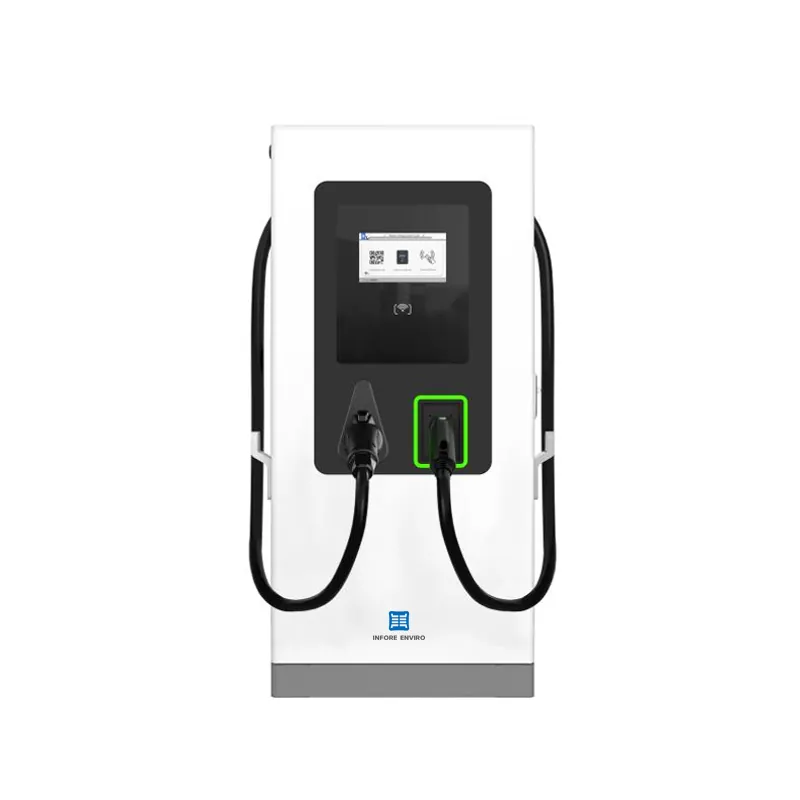
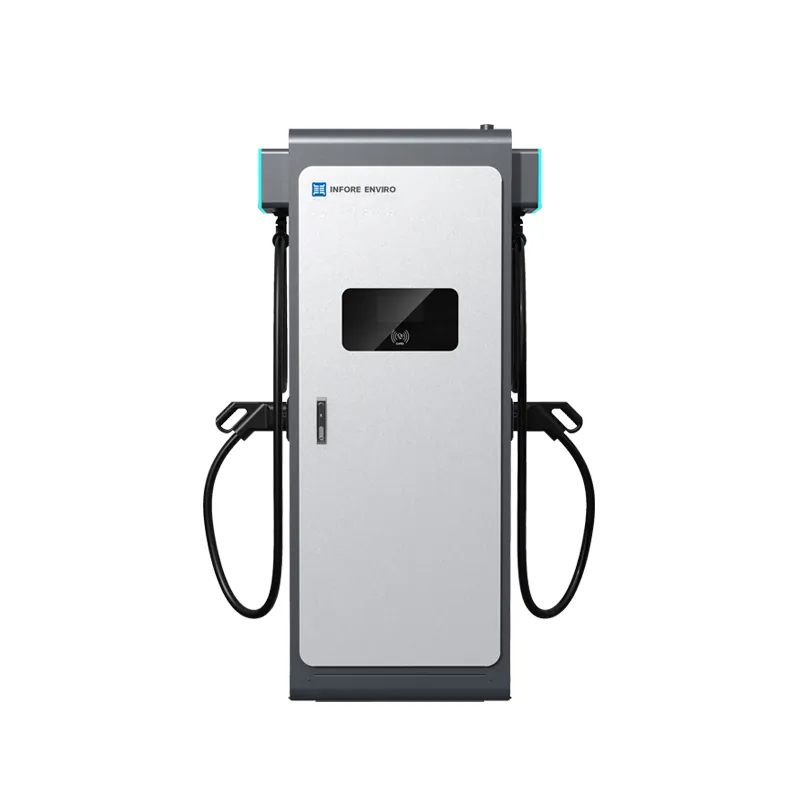
For sites requiring two Type 2 charging guns, the 14kW/42kW Carina series Commercial Floor-mounted unit provides one practical configuration. It offers power options from 14kW to 42kW and uses two guns to support simultaneous vehicle charging.
The unit has a 5-inch touchscreen HMI and supports OCPP dual-platform connectivity. Access options include APP and RFID card. Available communication methods include 4G, Wi-Fi, Bluetooth, and Ethernet. Its enclosure has an IP54 rating.
At INFORE ENVIRO, we position this configuration for residential and commercial projects where two vehicles may need charging from one floor-mounted unit. Different power and communication options allow project teams to select a setup according to site requirements.
This dual port EV charger should still be evaluated as part of the complete electrical plan. Power level, network connection, access method, parking arrangement, and expected simultaneous use need to be reviewed together before procurement.
Communication Supports Daily Site Management
Multi-vehicle charging involves more than local charger operation. Site operators may need to check equipment status, control user access, and connect chargers with a management platform. Standard OCPP support can help equipment communicate with compatible backend platforms.
Network conditions should therefore be checked before installation. Ethernet may suit projects with existing wired infrastructure. Wi-Fi or 4G can be considered where fixed network cabling is less practical. Connection planning should reflect the real conditions of each site.
The 5-inch touchscreen provides a local interaction point at the charger. For commercial projects, local HMI functions and platform connectivity serve different operational purposes. Procurement teams should consider both when reviewing equipment specifications.
Product Development Matters Behind the Charger
Shared charging equipment may operate for long periods and experience repeated connection cycles. Development and testing capability therefore matter alongside visible features such as screens, access methods, and communication functions.
Our company has more than 100 technical personnel, while R&D investment accounts for 25%. More than 20 testing personnel support verification activities, and our company holds over 30 patents. These resources support charging equipment development and testing work.
At INFORE ENVIRO, we also maintain self-development and manufacturing capabilities for B2B charging products. For project buyers, technical capability matters because equipment needs to match electrical design, communication requirements, installation conditions, and planned operating patterns.
Planning for Stable Multi-Vehicle Operation
A practical multi-vehicle charging site needs balanced decisions across power, parking behavior, communication, and user access. Distribution capacity and vehicle dwell time are just as important as charger specifications. Simultaneous demand should also be considered before equipment quantities and power levels are finalized.
For project owners and procurement teams, reviewing these factors early can reduce mismatches between charger configuration and real site conditions. The goal is not simply to install more charging points, but to create a charging arrangement that fits vehicle turnover, available power, parking space, and long-term management needs.