Connecting high-power charging depots to local electrical grids presents complex engineering challenges for commercial operators. Adding multiple commercial vehicles simultaneously creates sudden power spikes that exceed existing on-site transformer limits. Conducting a rigorous grid capacity assessment prevents costly transformer blowouts, utility penalty fees, and prolonged downtime. We emphasize accurate load calculation before procuring any charging hardware.
Expanding beyond preliminary test sites requires analyzing three-phase power availability, upstream substation headroom, and peak building consumption. Incompatible hardware choices create unmanageable voltage drops across facility branch circuits. By collaborating directly with an experienced hardware manufacturer, engineering teams can tailor station electrical architectures to localized grid constraints. We help project managers configure charging hardware that works within available electrical budgets.
With a decade of specialized EVSE production experience, INFORE ENVIRO delivers dependable hardware for utility-grade charging projects. Our self-developed manufacturing model supports complete OEM and ODM customization for distinct grid architectures. We engineer AC wallboxes and high-voltage DC stations designed to withstand continuous commercial duty cycles across transit terminals, logistics yards, and commercial fleets.
Calculating Feeder Capacity and Transformer Thresholds
Accurate grid assessment begins by measuring real-time peak facility demand against the local utility transformer rating. Commercial sites frequently host overlapping power draws from refrigeration, industrial machinery, and HVAC units. Adding high-draw charging stations without load profiling risks severe breaker tripping. We advise commercial integrators to map total electrical capacity across diverse shift cycles before finalizing equipment orders.
Where main service panels exhibit limited surplus amperage, deploying alternating current hardware offers an efficient strategy. Our AC equipment range includes 7 kW, 11 kW, and 22 kW configurations to match modest power supplies. For depot employee parking lots, our 11kW EV charger provides an IP55 ingress protection rating, shielding internal contactors from airborne dust and moisture intrusion.
Residential and multi-unit housing developments also operate under strict per-meter electrical thresholds. Upgrading upstream utility lines in residential zones often proves economically unviable. For these installations, our AC 7kW home EV charging station combines steady overnight replenishment with an IP65 rated enclosure, ensuring flawless operation in uncovered outdoor parking bays exposed to heavy rain.
Hardware Selection from a China EV charger manufacturer
Regulatory grid interconnect standards dictate hardware safety parameters in every global territory. Procuring uncertified hardware risks immediate grid disconnects by regional utility inspectors. As an established China EV charger manufacturer, we integrate regional electrical compliance directly into our board designs. This proactive engineering guarantees safe grid synchronization and speeds up local utility interconnection approval times.
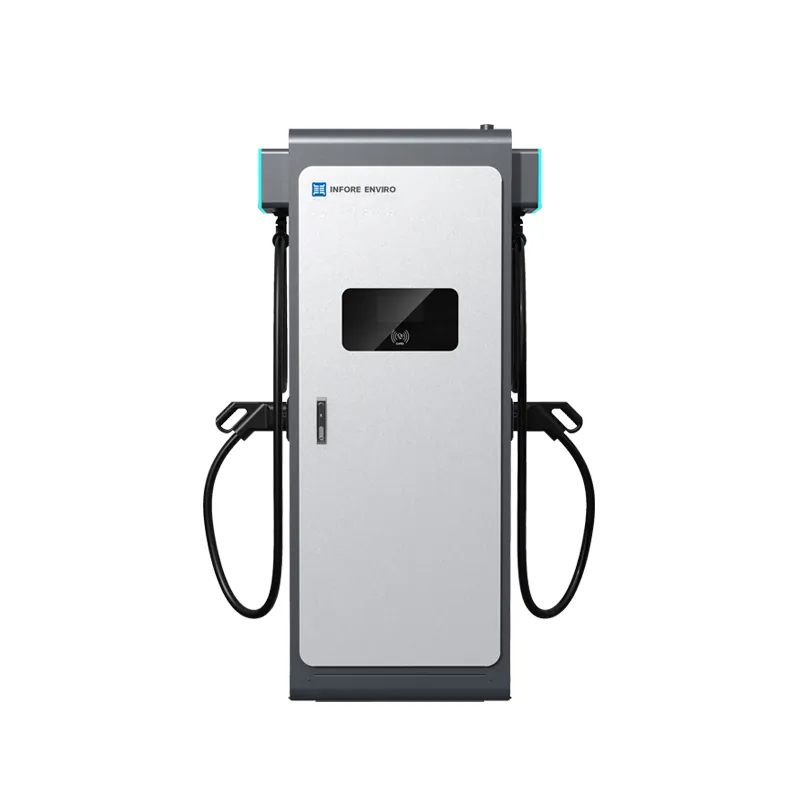
Physical connector standards must match target vehicle fleets without requiring field modifications. We manufacture equipment supporting China GB/T, European Type 2, and CCS2 standards. For commercial fleet depots with dual parking bays, our dual-gun Type 2 AC charger features a rugged IP54 housing, allowing two vehicles to balance AC charging simultaneously across a single distribution feeder.
Large infrastructure programs also demand third-party validation of critical safety circuitry. We maintain comprehensive domestic CCC certification, alongside international CE, CB, and RoHS marks. These certifications ensure our internal short-circuit protection, residual current sensing, and surge suppression components perform under heavy grid disturbances. Distributors must inspect these compliance certificates prior to placing commercial orders.
Managing DC Fast Charging Loads on Dedicated Feeders
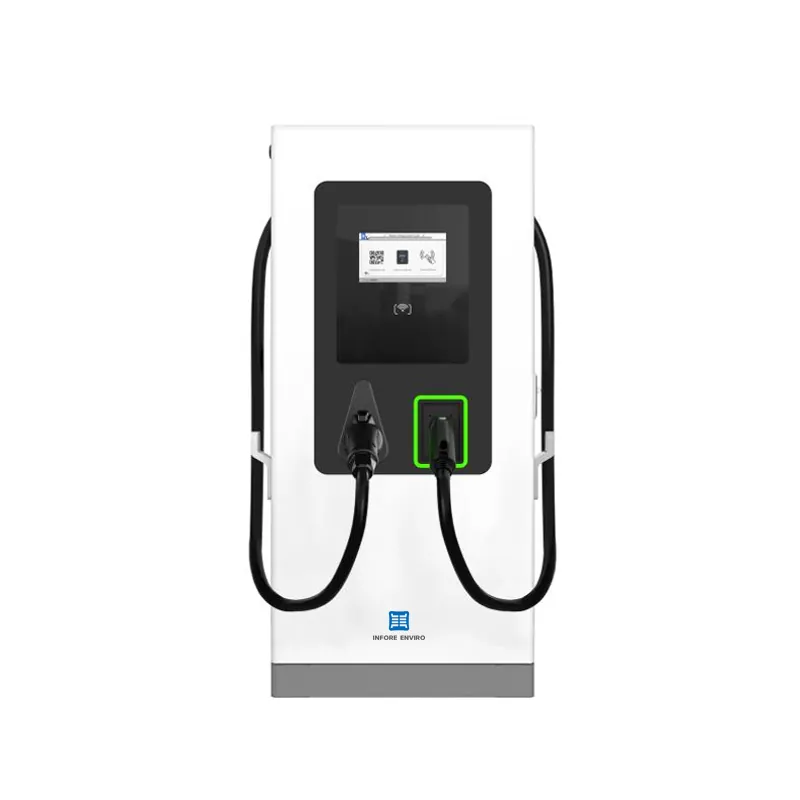
Sites equipped with dedicated medium-voltage transformers can accommodate intensive direct current fast charging. Our modular DC charging lineup covers power outputs from 30 kW up to 480 kW. Fleet managers requiring rapid vehicle turnaround routinely install our 160kW DC EV charging station. Encased in an IP54 enclosure, this dual-port unit handles heavy throughput in demanding depot environments.
When site power capacity cannot support multiple dedicated high-power chargers, hybrid equipment optimizes energy distribution. Our versatile integrated AC/DC charging station blends a DC 60kW rapid charger and an AC 22kW outlet inside an IP54 sealed cabinet. This hybrid topology enables operators to power fast-turnaround delivery vans and overnight fleet vehicles from one service connection.
Executing massive charging projects demands dependable production timing and rigorous factory testing. We operate a modern 12,000 square meter production facility that sustains steady output during high-volume production cycles. This established manufacturing footprint guarantees a consistent 30 to 45 day delivery window, enabling contractors to align hardware arrivals precisely with civil works and transformer installation schedules.
Grid integration also relies on smart communication protocols to manage power throttling dynamically. We embed Open Charge Point Protocol (OCPP) firmware across our entire product line. This universal protocol allows backend management software to monitor transformer loads in real time, automate power scheduling, and perform remote system adjustments without requiring proprietary networking gateways.
Technical Auditing for Long-Term EV charging infrastructure
Successful deployment of commercial EV charging infrastructure design & engineering requires planning for post-commissioning operational support. Unplanned hardware outages disrupt transit schedules and damage commercial client trust. We encourage procurement managers to evaluate supplier response times and replacement component availability before contract signing. Choosing hardware backed by comprehensive technical support safeguards long-term capital investments against premature obsolescence.
To minimize maintenance liabilities, we provide a full 2-year warranty across our entire commercial charging portfolio. Our engineering support structure includes a 7×24 hour after-sales response service, providing continuous troubleshooting assistance to field technicians. This rapid support network ensures that any grid anomalies or component errors are resolved before they escalate into costly network shutdowns.
Environmental ingress ratings must strictly correspond to physical site exposure. Installing standard enclosures in coastal zones with high humidity or industrial washdown areas causes severe corrosion over time. We urge engineers to audit our specification sheets to verify that IP54, IP55, or IP65 ratings meet the exact environmental stresses of each installation point.
Completing an exhaustive grid assessment and selecting matched charging equipment establishes a reliable charging hub. Verify that connector choices, power ranges, and OCPP compatibility align with utility interconnection rules. By partnering with a proven hardware manufacturer, procurement teams can deploy high-capacity charging networks that operate safely within local grid capacities.