When a municipal transit hub or commercial logistics center upgrades its fleet, a single offline charger instantly disrupts the entire daily dispatch schedule. Project integrators frequently discover that standard equipment cannot endure the relentless thermal stress of continuous commercial duty cycles. Modernizing infrastructure requires hardware explicitly engineered for high-frequency operation. We know that deploying reliable networks demands strict attention to internal component durability.
Transitioning from temporary pilot sites to permanent regional networks highlights the glaring gap between consumer units and professional-grade infrastructure. Substandard enclosures inevitably fail under harsh weather or mechanical impact, driving up unexpected daily maintenance costs. Partnering with an established original equipment manufacturer ensures structural integrity across every deployment phase. We prioritize building resilient hardware that directly protects your physical capital investment.
At INFORE ENVIRO, we inject 10 years of specialized EVSE manufacturing expertise into every commercial project. Our self-developed, in-house production model fully supports demanding OEM and ODM custom engineering requirements. We specifically architect our charging stations to conquer the extreme operational demands of heavy-duty fleet depots, transit corridors, and high-turnover public parking plazas.
Evaluating Power Demands Across Commercial Deployments
Selecting appropriate power configurations for distinct operational profiles forms the absolute foundation of any infrastructure project. Commercial sites vary substantially in vehicle dwell time, active electrical capacity, and charging urgency. Fleet operators need predictable overnight charging routines, whereas transit corridors require rapid energy delivery. We advise distributors to assemble balanced hardware portfolios to satisfy these diverse charging scenarios effectively.
For workplace parking lots and multi-family residential projects, alternating current hardware provides cost-effective operational scalability. Our available AC power options cover standard 7 kW, 11 kW, and 22 kW outputs. For commercial lots, our 11kW EV charger features an IP55 ingress protection rating. For residential installations, our 7kW home EV charging station delivers IP65 weatherproofing for fully exposed outdoor driveways.
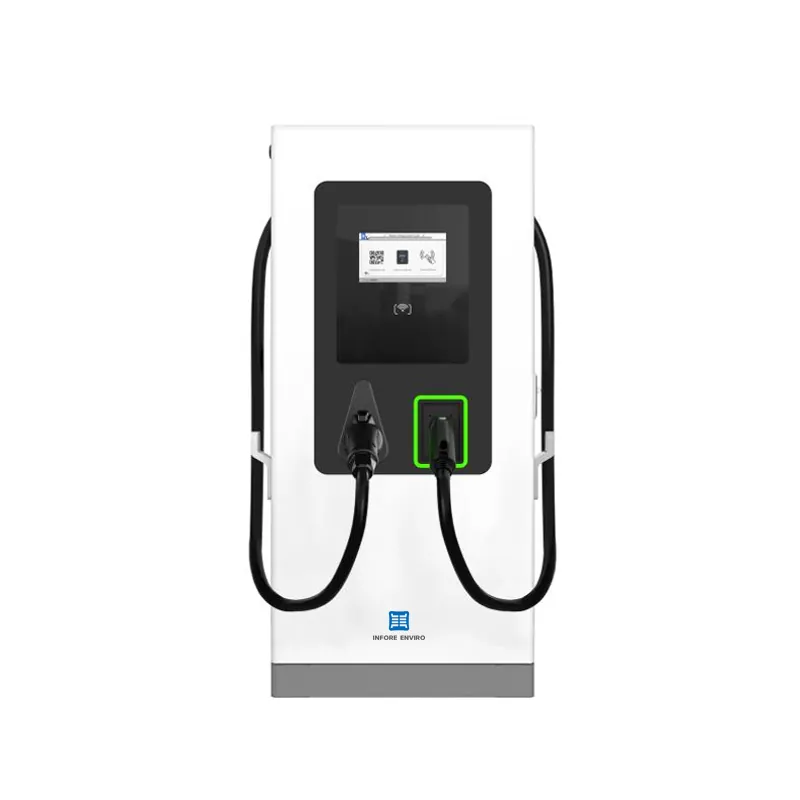
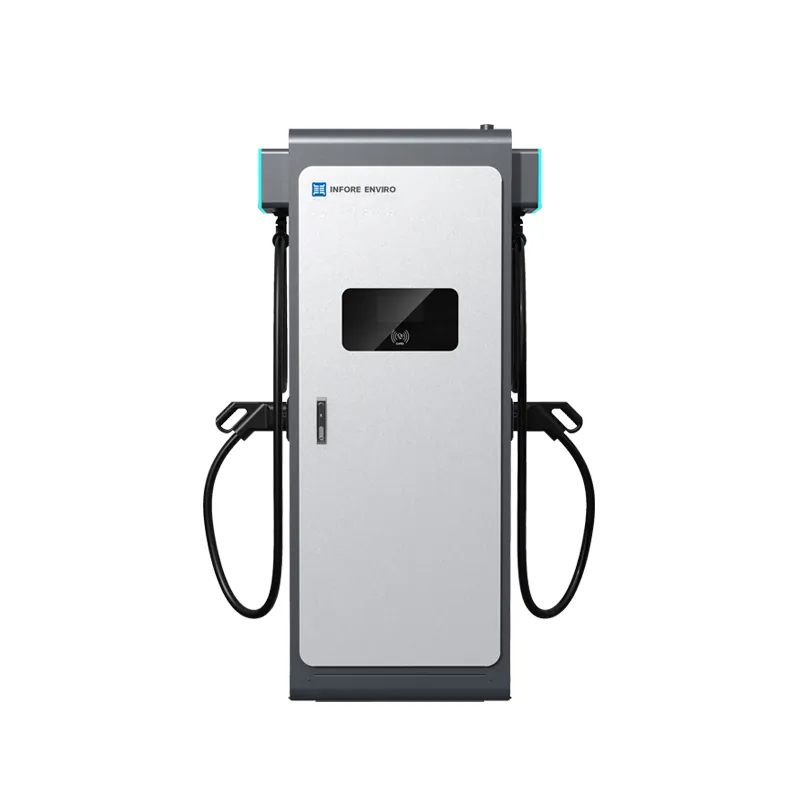
When high-traffic sites require accelerated vehicle turnaround, direct current fast chargers become indispensable infrastructure assets. Our self-developed DC charging portfolio spans from 30 kW up to a massive 480 kW output. Commercial operators frequently deploy our 160kW DC EV charging station, which offers an IP54 rating. This heavy-duty dual-gun station delivers weather-resistant durability and fast throughput for demanding fleet depots.
For mixed-demand commercial locations, hybrid AC and DC stations optimize overall site utilization. Combining diverse charging speeds within a single footprint easily accommodates varying vehicle types simultaneously. Our integrated AC/DC charging station elegantly pairs DC 60kW and AC 22kW charging within an IP54 sealed enclosure. This versatile configuration provides operational flexibility while withstanding challenging outdoor environmental conditions.
Technical Compliance from a China EV charger manufacturer
Regional safety standards and electrical codes strictly dictate which charging equipment can be legally deployed globally. Sourcing non-compliant hardware creates severe financial liability and risks frustrating site commissioning delays. As an established China EV charger manufacturer, we integrate regional compliance directly into our product architecture. This proactive engineering approach eliminates expensive on-site modifications and accelerates municipal grid approval processes.
Hardware physical interfaces must align seamlessly with regional connector standards in your destination market. We manufacture charging units supporting China GB/T, EU Type 2, and CCS2 formats. Matching local physical connectors ensures broad compatibility across mixed commercial vehicle fleets. For European destinations, our dual-gun Type 2 AC charger features a durable IP54 enclosure designed to withstand continuous public use.
Beyond physical interfaces, rigorous electrical certifications are entirely mandatory for commercial deployments. We actively maintain CCC certification for domestic projects, along with CE, CB, and RoHS marks for international markets. These independent certifications definitively verify that our internal electrical protection mechanisms, surge suppression devices, and ground-fault monitoring systems function reliably under continuous, heavy load conditions.
Factory Production Capacity and Network Interoperability
Securing competitive equipment pricing is only one element of a successful commercial procurement program. Infrastructure success relies heavily on predictable factory output and stringent quality control standards. Operating our dedicated 12,000 square meter manufacturing facility formally ensures stable production throughput. This massive scale enables a highly dependable lead time of 30 to 45 days, allowing project integrators to meet tight rollout deadlines.
Modern infrastructure also demands seamless network integration across various charge point management platforms. Proprietary communication barriers create administrative bottlenecks and heavily unwanted vendor lock-in. We specifically engineer our hardware with native Open Charge Point Protocol support. This OCPP compliance ensures our stations integrate smoothly with third-party backend platforms for real-time monitoring, automated billing, and remote system diagnostics.
Reliable outdoor operation strictly requires rugged mechanical and thermal engineering. We construct all our charging stations with tightly sealed enclosures and internal temperature monitoring systems. These built-in electrical safeguards actively protect equipment from overvoltage, overcurrent, short circuits, and extreme weather events. True in-house manufacturing allows our team to execute comprehensive quality testing on every unit before it leaves the factory floor.
Securing the Lifecycle of Your EV charging solutions
Capital expenditure in modern electric infrastructure only yields positive returns if the physical hardware survives years of relentless outdoor exposure. We urge project integrators to evaluate the long-term technical support ecosystem rather than focusing exclusively on initial unit pricing. Securing a responsive engineering partner guarantees that unexpected field anomalies are resolved rapidly before they can drastically impact your daily network revenue.
Protecting your commercial network requires formalized guarantees covering all critical internal electrical components. We actively secure our professional charging hardware with a comprehensive 2-year warranty to confidently safeguard your capital deployment. To ensure continuous network availability, our engineering team executes a dedicated 7×24 hour after-sales response protocol. This rapid troubleshooting capability keeps your fleet moving without frustrating operational delays.
Long-term durability also demands perfect alignment between hardware sealing specifications and the physical site environment. Deploying an IP54 station in a location facing constant high-pressure water runoff accelerates structural degradation. We encourage integrators to rigorously review our specification sheets, ensuring IP54, IP55, or IP65 ingress protection ratings precisely match the daily realities of your chosen commercial installation site.
Finalizing an infrastructure upgrade means securing hardware that will reliably perform under tomorrow’s increased grid demands. Ensure your chosen connector formats, specific power outputs, and strict backend software protocols are aligned with regional mandates. By demanding verified electrical certifications, proven manufacturing capacity, and rugged thermal engineering, network operators can confidently future-proof their heavy-duty EV charging solutions.