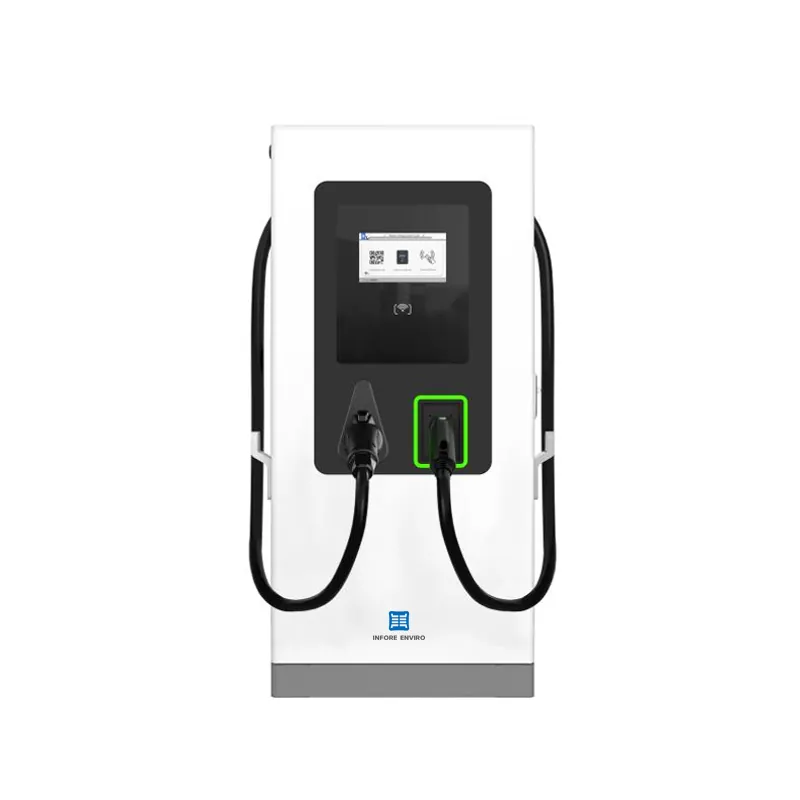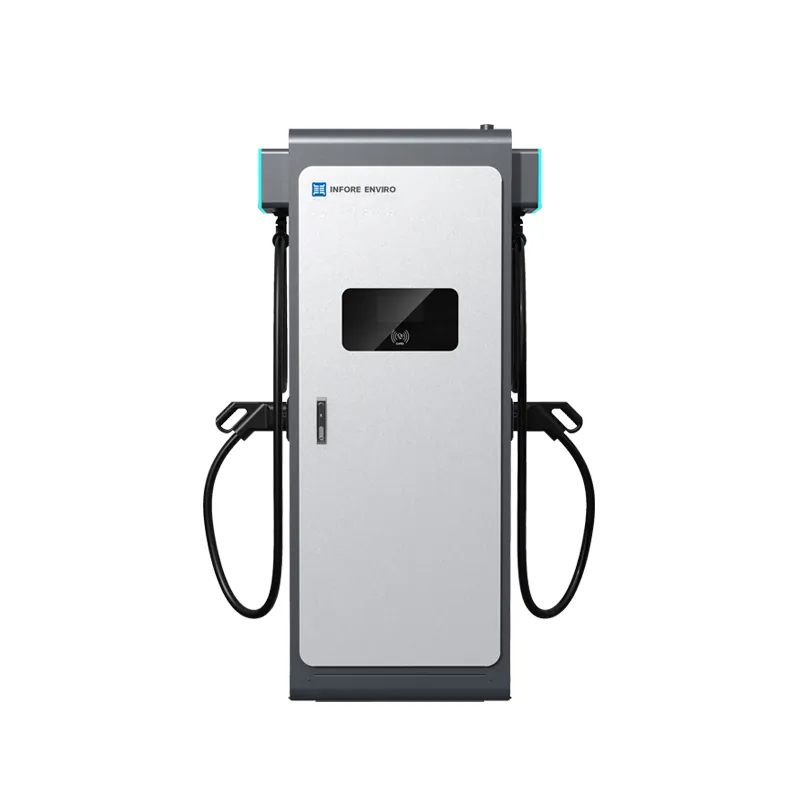
Commercial and residential charging sites often have limited electrical capacity. When two EVs charge at the same time, unmanaged power demand can create unnecessary peaks or force operators to oversize upstream equipment. Smart load balancing helps distribute available power between charging points according to real-time demand. For a dual EV charger Level 2, this function can improve power use, reduce pressure on site infrastructure, and support more stable simultaneous charging.
Why Load Balancing Matters in Dual-Port Charging
Dual-port charging equipment allows two vehicles to charge from one unit, but both connectors may not always need the same amount of power. Vehicle battery state, onboard charger limits, and charging progress can change the power demand of each port.
Smart load balancing monitors available capacity and allocates power dynamically. If one vehicle reduces its charging demand, more available power can be directed to the second connector. This helps make better use of the site’s existing electrical capacity without relying on fixed power allocation.
For B2B projects, we see this as useful in offices, apartment parking areas, hotels, fleet depots, and commercial car parks. A dual port EV charger can serve two parking spaces while allowing the electrical system to respond to changing charging conditions.
How Dynamic Power Allocation Works
A basic dual charger may divide power evenly between two connectors. Smart load balancing takes a more flexible approach. The system can adjust output according to the total power limit set for the charging unit or site.
For example, when both vehicles request power, the available capacity can be shared between them. If one session ends, the remaining vehicle can receive a larger share of the available output. This process can reduce unused capacity during normal operation.
Site-level control is also important when several chargers operate together. Load management can help prevent charging demand from exceeding a predefined electrical limit. This can support more practical planning for transformers, distribution boards, and upstream cabling.
Benefits for Commercial Charging Operations
Commercial operators usually need to consider both user access and electrical cost. Smart balancing can reduce sudden demand increases caused by several vehicles starting to charge at similar times. It can also help operators use installed capacity more efficiently during busy periods.
Charging duration also affects power distribution. Vehicles parked for several hours may not need maximum power throughout the full session. Dynamic allocation allows available capacity to move between active ports as charging demand changes.
This makes a dual EV charger Level 2 more suitable for sites where dwell times vary. Workplace users, hotel guests, residents, and fleet vehicles may all have different charging schedules. Flexible power distribution can help the same charging infrastructure support these mixed patterns.
Product Configuration for Dual-Port Applications
In practical projects, load management works together with charger hardware and communication functions. Our 14kW/42kW Carina Series Commercial Floor-mounted charger from INFORE ENVIRO provides power options from 14kW to 42kW and uses two Type 2 charging guns for simultaneous charging.
The unit includes a 5-inch touchscreen HMI and supports APP and RFID Card access. Communication options include 4G, Wi-Fi, Bluetooth, and Ethernet. It also supports OCPP dual-platform communication, which can help connect charger operation with management systems.
Its enclosure carries an IP54 rating for protection against dust and water exposure. This configuration allows the dual port EV charger to be used in residential and commercial settings where two vehicles may need access to one charging unit.
Management Platforms and Load Control
Smart load balancing becomes more useful when charging data is visible to operators. Management platforms can monitor charger status, charging sessions, and communication conditions. OCPP support can also help integrate charging equipment with compatible backend systems.
For commercial projects, remote visibility can simplify routine operation. Operators can review usage patterns and identify when charging demand is concentrated. This information can support later adjustments to power allocation rules or site expansion plans.
We design our charging products with B2B deployment needs in mind. INFORE ENVIRO has more than 100 technical personnel, invests 25% in research and development, and has more than 20 testing personnel. Our technical development work is also supported by more than 30 patents.
Planning Electrical Capacity for Dual Charging
Load balancing does not remove the need for proper electrical design. We recommend reviewing cable size, circuit protection, upstream capacity, expected vehicle numbers, and simultaneous charging rates before installation.
A smart system works within the available electrical limit. If total site demand is too close to the maximum supply capacity, the charger may need to reduce output more frequently. Correct capacity planning therefore remains important for charging speed and operational stability.
For larger projects, we also recommend considering future charger additions. Reserving suitable distribution capacity and communication architecture can make later expansion easier to manage.
Smarter Use of Existing Power Capacity
Smart load balancing improves dual-port charging by matching power allocation with real-time demand. It helps reduce wasted capacity, controls peak demand, and supports more practical use of existing electrical infrastructure.
For B2B charging projects, we believe the value comes from combining suitable charger power, communication functions, electrical planning, and operational control. When these elements work together, dual-port Level 2 charging can support more vehicles without making site power management unnecessarily complex.