When we compare EV charging equipment for a business project, we do not look only at charging speed. We also check how the charger communicates with the management platform. A commercial EV charging station may need remote monitoring, user authorization, charging records, and software integration. This is where OCPP becomes important. So, does the Emporia EV Charger support OCPP? Based on Emporia’s current official information, the answer is no, not currently.
What OCPP Actually Does
OCPP stands for Open Charge Point Protocol. It is a communication protocol designed to connect EV chargers with charging management systems. In simple terms, it helps the charger and the backend platform communicate.
For a B2B project, this can be important. A charge point operator may want to manage chargers from one platform. A fleet operator may need charging data for multiple vehicles. A distributor may also need equipment that can work with different software environments.
OCPP is therefore different from Wi-Fi or 4G. Those technologies provide a communication connection. OCPP defines how charging equipment communicates with a compatible management system.This distinction matters when we evaluate a charger for commercial deployment. A product can have internet connectivity without supporting OCPP.
Does Emporia Currently Support OCPP?
Emporia’s own Help Center provides a clear answer. Its current documentation states that OCPP is not currently supported by Emporia EV chargers. Emporia lists OCPP among integrations that are not currently supported and says there is no specific development timeline at present.
This is an important detail for procurement teams. We would not describe an Emporia charger as an OCPP-compatible product based only on the fact that it connects to Wi-Fi or can be controlled through an app.
Emporia’s current charger uses the Emporia Energy app for setup, monitoring, and control. The official documentation explains that the charger connects through Wi-Fi, while Bluetooth is used during initial setup.
That approach can work well for its intended use cases. However, it is not the same architecture as an OCPP-enabled charger connected to an independent charge point management system.
Why OCPP Matters More in B2B Charging
For a homeowner, an app-based charging system may be enough. The situation changes when a company operates multiple charging points.
Imagine an office building with 30 chargers. The facility manager may want one interface to monitor charger status and energy consumption. A fleet operator may need centralized control across several depots. A charging operator may want to integrate hardware from different manufacturers into its software environment.
This is where an OCPP EV charger can offer a different approach. Instead of relying only on a manufacturer’s proprietary cloud platform, OCPP provides a standardized communication framework between compatible charging hardware and backend systems.
We would therefore put OCPP on the technical checklist whenever we review equipment for distributors, charge point operators, fleet projects, or commercial parking facilities.
OCPP Is Not the Same as Load Management
There is another point we think procurement teams should separate. OCPP and load management solve different problems.
Emporia currently provides intelligent Load Sharing for compatible EV chargers. According to its documentation, the system can distribute available power among multiple Emporia chargers and keep the total within a defined electrical limit.
That is useful when a site has limited electrical capacity. However, load sharing does not automatically mean the charger supports OCPP.
The same principle applies to other smart charging functions. Scheduling, power adjustment, cloud connectivity, and energy monitoring can all be useful features. None of them should be treated as proof of OCPP compatibility.
For B2B buyers, we recommend checking the communication protocol in the actual technical specification rather than relying on the general term “smart charger.”
What Should B2B Buyers Look For?
If we were selecting chargers for a workplace, fleet depot, or commercial parking project, we would first define the required backend system.
If the project will use the manufacturer’s own platform, proprietary communication may be acceptable. If the operator already has a third-party management system, we would check whether OCPP is mandatory.
We would then verify the exact OCPP version. OCPP 1.6J and OCPP 2.0.1 are not simply different names for the same feature. Their functions and implementation requirements differ.
We would also check the network method. Depending on the product, communication may use Ethernet, Wi-Fi, 4G, or another connection. The network connection and OCPP protocol should be considered separately.
This is especially relevant when equipment will be deployed across multiple sites. Remote diagnostics and software management can become much more important as the number of chargers increases.
An Alternative for Commercial Projects
For buyers who specifically require OCPP, we would compare Emporia with commercial charging equipment that lists OCPP directly in the product specification.
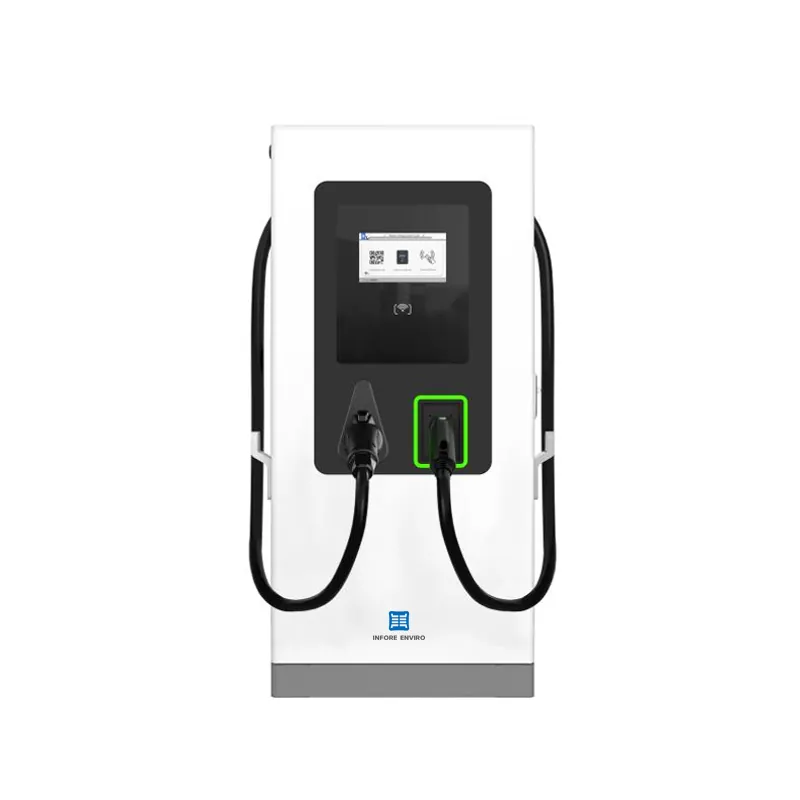
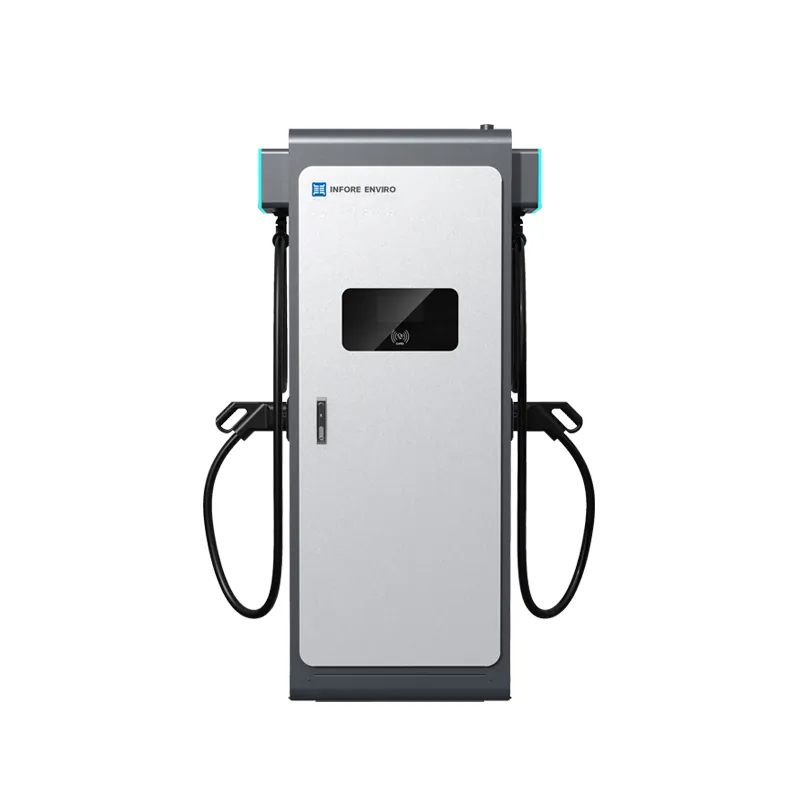
For example, INFORE ENVIRO’s 160 kW DC fast charger specifies OCPP 1.6J, dual CCS2 guns, IP54 protection, and CE and RoHS certifications. It is designed for commercial applications such as fleet depots, logistics hubs, and airport charging.
Its 14–42 kW Carina commercial AC charger also supports OCPP dual-platform connection. The model offers two Type 2 charging guns, 4G, Wi-Fi, Bluetooth, and Ethernet connectivity, with IP54 protection.The company also offers 20 kW, 30 kW, and 40 kW DC compact chargers with OCPP 1.6J, plus scheduled charging and dynamic load balancing functions.
These specifications give B2B buyers a useful comparison point. The important question is not simply whether a charger is “smart.” It is whether its communication method fits the project’s management architecture.
Check the Protocol Before Signing the Purchase Order
Before we approve a charging equipment quotation, we would check four things: OCPP version, backend compatibility, network method, and remote management functions.
We would also ask the manufacturer for the exact product datasheet. This prevents a common procurement mistake: assuming that every charger from the same brand has identical communication capabilities.
For OEM and ODM projects, we would go one step further. We would confirm whether the required communication protocol, connector standard, power rating, and regional certification can be included in the requested configuration.
INFORE ENVIRO states that it has more than 10 years of EV charging experience and supports self-developed, in-house production and customized development. Its product portfolio covers AC chargers from 7 kW to 22 kW and DC equipment extending to 480 kW. The company also lists support for standards and certifications including GB/T, Type 2, CCS2, CE, CB, and RoHS according to the relevant product and market.
For commercial projects, we would treat OCPP as a technical requirement, not a marketing label. Emporia’s current documentation says its EV chargers do not currently support OCPP.
If centralized management and third-party platform integration are required, we would compare products based on their actual protocol specifications. For distributors, fleet operators, and project integrators, INFORE ENVIRO provides OCPP-enabled AC and DC charging equipment across multiple commercial power configurations.