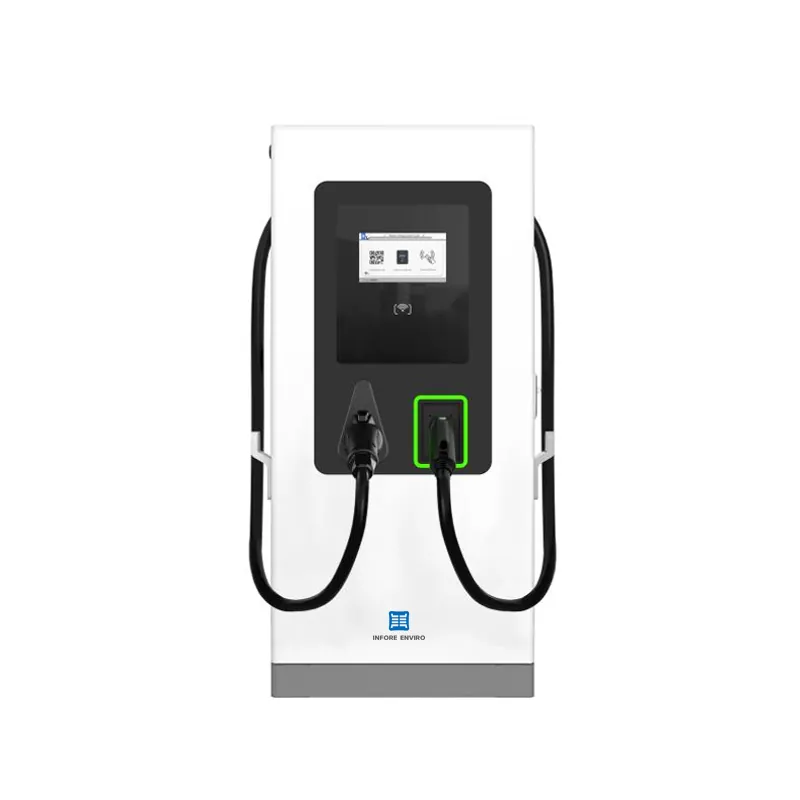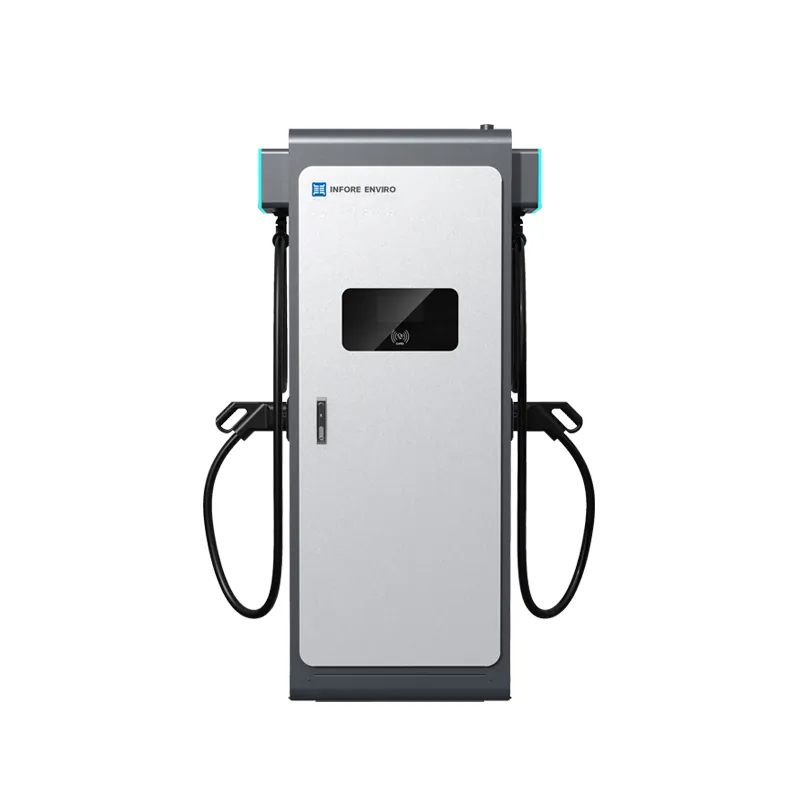
Retail centers, fleet depots, and commercial properties are facing a structural shift in driver behavior. Today, EV drivers actively choose destinations based strictly on charging availability. Property managers recognize this demand but often struggle with procurement technicalities. Selecting hardware that survives heavy daily use while integrating seamlessly with management networks is the primary hurdle for commercial operators.
To bridge this gap, businesses need resilient hardware rather than consumer-grade plastic units. A robust deployment directly influences how long a customer stays. For over a decade, INFORE ENVIRO has focused on engineering durable infrastructure. With 10 years in EVSE manufacturing, our in-house production ensures property owners receive industrial-grade equipment tailored strictly for high-traffic environments.
Aligning Power Output for Fleet Depots
The foundation of any successful deployment lies in matching the hardware’s power output to the expected parking duration. Installing an ultra-fast charger at an employee lot is inefficient, just as placing a slow charger at a highway rest stop frustrates drivers. Procurement managers must analyze average dwell times to select the appropriate power configuration.
For locations where visitors stay for several hours, such as corporate workplaces, hotels, or shopping malls, AC wallboxes provide the most cost-effective solution. Reliable AC hardware typically covers a power range of 7 kW, 11 kW, and 22 kW. This range efficiently replenishes batteries over a standard shift or overnight stay, requiring fewer grid upgrades.
Conversely, fast-food chains, fleet depots, and highway transit hubs demand rapid turnover to remain profitable. For these locations, DC fast chargers are mandatory. Our available DC power ranges stretch from compact 30 kW, 40 kW, and 44 kW units up to heavy-duty 60 kW, 120 kW, 160 kW, 180 kW, 240 kW, 360 kW, and 480 kW stations.
Ensuring Uptime for a Commercial EV Charging Station
Customer loyalty plummets instantly when a driver arrives at a defective charger. For outdoor installations, environmental resilience is non-negotiable. Standard consumer chargers often fail under extreme weather conditions, but our industrial-grade units utilize tightly sealed enclosures. Understanding Ingress Protection ratings is critical for procurement engineers evaluating equipment for exposed parking lots or coastal fleet depots.
A premium commercial EV charging station features a strict waterproof and dustproof design, typically rated at IP55. This structural integrity guarantees internal high-voltage components remain isolated from driving rain, snow, and airborne debris. Investing in high IP-rated hardware drastically reduces maintenance calls, ensuring bays remain highly operational and profitable year-round.
Beyond physical ingress, internal safety mechanisms dictate overall equipment lifespan. Commercial hardware must include electrical protection, guarding against over-current, over-voltage, short circuits, and current leakage. These protocols protect the vehicle’s battery and safeguard the property’s electrical grid from catastrophic faults. Weather-resistant durability combined with electrical safeguards ensures continuous commercial operation.
Protocol Integration and Global Compliance Standards
Hardware is only half the equation; it must communicate flawlessly with a centralized backend. Fleet operators and charge-point operators rely on the Open Charge Point Protocol to monitor usage, set billing rates, and balance electrical loads. Selecting equipment that natively supports advanced OCPP standards ensures that the hardware will not become stranded assets if the software platform ever changes.
Hardware flexibility allows operators to switch management platforms without swapping out physical units. By fully supporting OCPP, our infrastructure can seamlessly execute dynamic load balancing across multiple bays. This prevents peak-time grid overloads while ensuring every connected vehicle receives a stable charge. Scalability depends entirely on this open-protocol architecture, giving business owners complete control over energy management.
Global deployment requires strict adherence to regional safety and connector standards. Procurement teams must verify that the selected hardware holds the proper certifications for their specific target market. Comprehensive testing guarantees that the equipment meets stringent international safety and performance benchmarks. Without these credentials, installing public-facing electrical infrastructure exposes the property owner to massive liability and compliance failures.
We secure global certifications, including China GB/T and CCC (3C). For international markets, our equipment features EU Type 2 and CCS2 compatibility, alongside CE, CB, and RoHS compliance. Possessing these credentials proves the hardware has passed rigorous quality control, making it legally and technically viable for broad commercial deployment.
Spec Sheet Checklist for Distributors
Before finalizing a bulk order or signing an integration contract, distributors and project managers must scrutinize the manufacturer’s backend capabilities. Relying on an experienced OEM/ODM partner is crucial for large-scale rollouts that require custom branding or specialized hardware configurations. A supplier’s production capacity directly dictates project timelines, meaning integrators must rigorously assess the factory footprint and standard delivery windows.
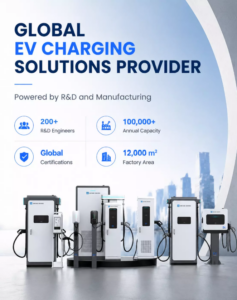
A robust supply chain eliminates costly installation delays for commercial properties. With our massive 12,000 square meter factory, we maintain a predictable lead time of 30 to 45 days. This manufacturing scale allows distributors to commit to strict project deadlines with confidence. Self-developed, in-house production ensures that every single unit meets the exact specifications promised during bidding.
Long-term reliability remains the most critical factor for property owners. When equipment inevitably requires servicing, the speed of technical support determines how quickly revenue generation resumes. Procurement teams must demand a standard 2-year warranty on all commercial hardware. We provide this warranty as a vital financial safety net against premature component failure in highly demanding outdoor environments.
Finally, responsive technical support is mandatory when deploying EV charging for businesses. A dedicated 7×24 hour after-sales response team ensures that software glitches or hardware faults are addressed immediately. This round-the-clock support eliminates prolonged downtime, maximizing the site’s return on investment. By combining certified hardware, scalable OCPP integration, and rapid after-sales service, operators can build networks that permanently secure customer loyalty.